

India’s chess culture
Vishwanathan Anand has made chess India’s sport
Business Standard Editorial Comment | New Delhi
November 29, 2014
Last Updated at 21:45 IST
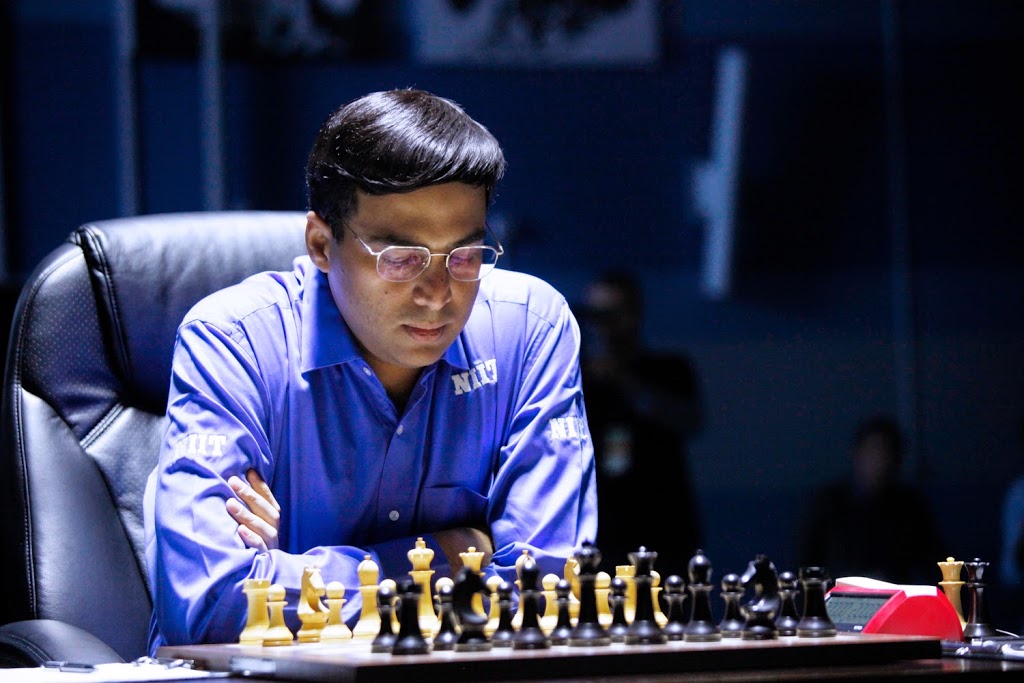
India’s first Grandmaster and former world chess champion, Viswanathan Anand, recently lost a world championship match against Magnus Carlsen of Norway. Chess is a young person’s game, requiring mental plasticity and physical energy. Although Anand has no plans to retire, he turns 46 in December. This match may have been his last realistic chance at regaining the world title.
The Chennai resident has the unique distinction of having won and defended the title successfully in three different formats. He first challenged Garry Kasparov (unsuccessfully) way back in 1995, when Carlsen was four years old. At that time, India had just two Grandmasters (the highest title in chess). There are now 36 Indian Grandmasters, eight women GMs and 60 International Masters. At the Tromso Olympiad in August this year, the Indian men’s squad won the bronze medal in the Open section where 172 nations were competing. The women’s team was also in the running for medals though it ultimately came tenth.
Koneru Humpy has been a challenger for the world women’s title. At world junior, and age-group levels, many Indians have won medals. At the World Youth Chess Championships in Durban in September for instance, Indians picked up six medals, including two golds. This was the largest haul by any country. The chess pyramid also has a broad base. India has the largest active chess population with over 43,000 players registered as having played a tournament in the last 12 months. The vast majority of those players are young and many are still in school.
Remarkably, this happened without much government support or recognition. If ever an individual could be said to have inspired an entire sporting movement, Anand did. Chess is perceived to be a healthy intellectual exercise largely because Anand coupled stunning success to his own brand of unassuming sportsmanship. The internet-infotech revolution was a force multiplier. The game has always fascinated mathematicians and programmers: information theorist Claude Shannon calculated that the number of possible positions exceeds the number of atoms in the universe. This makes it difficult to programme the search or prune the process for finding good moves. By the mid-1990s, Moore’s Law (computer power doubles roughly every three years) helped make a dent in the necessary massive calculations. That turned chess programmes and databases into world beaters. The internet also made it possible to play strong, geographically-dispersed opposition. Strong engines and online play have helped talented Indians hone their skills in ways that earlier generations could not.
The apex sports body, the All India Chess Federation or AICF is well-funded and efficient. There is a good domestic circuit with over Rs 4 crore disbursed as prize money in domestic tournaments in 2013. Most large cities have clubs and coaching. The AICF has seen its share of controversies, like other sports federations (N Srinivasan, the ousted chief of the Board of Control for Cricket in India was the president of AICF between 2001 and 2011). At one stage, the sports ministry even debarred official funding to chess. That has changed. There is now some government support. Several public sector enterprises and public sector banks also hire players on respective sports quotas. But most of the support has come from the private sector with many sponsors expressing interest because of the excellent brand image.
Many talented young Indians nurture ambitions of making it to the very top. The biggest barrier to any such ambitions was always mental. It was considered utterly impossible for an “outsider” from a nation with no “chess culture” to break through and be part of an elite group. Anand shattered that preconception. He has the satisfaction of knowing that there are a bunch of teenagers and pre-teenagers who would like to emulate him.
Source: http://www.business-standard.com
there is going to be lot of GMs from India but at some point they would drop chess to pursue their livlihood.. remember parmimajan negi..the chess WC smacks of eliteness and it is out of touch with changing times. No sport the champion waits for a challenger.. the knockout format is best.. that way the importance of theory is made less
The next Anand is Nakamura.