

Too Hard for Science? Seeing If 10,000 Hours Make You an Expert
By Charles Q. Choi | Jun 6, 2011 02:10 PM
Experiment Might Take Thousands of Volunteers and Decades of Effort
In “Too Hard for Science?” I interview scientists about ideas they would love to explore that they don’t think could be investigated. For instance, they might involve machines beyond the realm of possibility, such as particle accelerators as big as the sun, or they might be completely unethical, such as lethal experiments involving people. This feature aims to look at the impossible dreams, the seemingly intractable problems in science. However, the question mark at the end of “Too Hard for Science?” suggests that nothing might be impossible
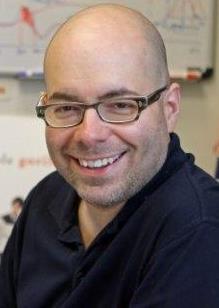
The scientist: Christopher Chabris, assistant professor of psychology at Union College, research affiliate of the MIT Center for Collective Intelligence, and co-author of “The Invisible Gorilla: How Our Intuitions Deceive Us,” out in paperback on June 7.
The idea: The concept that 10,000 hours of practice can make one an expert in a field — an idea developed by psychologist Anders Ericsson and popularized by Malcolm Gladwell in his book “Outliers” — has become prevalent enough to prompt one-time commercial photographer Dan McLaughlin to quit his job and try and become a professional golfer. But which is more important for becoming an expert — practice or talent?
“The prevailing theory in cognitive psychology, going back to Adriaan de Groot, who studied chess grandmasters, and later to Anders Ericsson, who studied other domains such as music and sports, is that expertise is all a matter of how much one practices, and that there’s no such thing as a particular talent that will make it easier for someone to become an expert,” Chabris says. “If that’s true, that’s a positive thing — there’s nothing holding me back from, say, becoming a professional basketball player.”
“However, a lot of people certainly find this idea of hard to believe, and if you do talk with coaches who teach chess to kids, they do think some of them have more talent, and some have less,” Chabris notes. “The practice theory clashes with intuition, and while scientists don’t rely on intuition but data, when intuition clashes with the data that much, perhaps more experiments are in order.” Moreover, “the fact that people who are experts have practiced more than people who are novices doesn’t prove that the practice, by itself, caused the expertise.”
The ideal experiment to address this question would have thousands of volunteers each spend 10,000 hours practicing a randomly assigned skill to see if they indeed become experts afterward. “The results could be very, very important,” he says. “The results could really impact the whole way we think about education.”
The problem: Recruiting a volunteer willing to practice a skill for 10,000 hours is a challenge unto itself. Enlisting thousands in a definitive experiment that accounted for as many of the myriad differences between people that might influence whether they become experts or not, would be even harder, not to mention potentially very expensive — getting, say, 2,000 volunteers to practice a skill for 10,000 hours at $10 per hour would cost $200 million, Chabris notes.
Randomly assigning volunteers might not go over so well either. “You’re volunteering 10,000 hours of your life, and imagine a situation where you’re not happy with what you’ve been assigned — ‘Congratulations, Mr. Smith, you’ve been selected to become a master purchasing manager,'” Chabris says.
Age is potentially a major confounding factor. “There are arguments that the younger you are, the more easily your brain soaks up skills, and I’m not sure in our society whether parents would really go along with randomly assigning kids to learn a skill,” Chabris says. Other challenges would include how to judge whether a participant was an expert or not, and ensuring that the quality of teaching remained consistent for all volunteers.
More here.
What’s an “expert” at chess? The USCF definition is a USCF rating of 2000, but a 2000 would get destroyed by the world’s best players, who are around 2800 FIDE. Perhaps a 2400 would be an “expert,” even though that player would only be able to draw an occasional game against the top players. I suppose you’d have to define “expert” statistically – top 1%, or top .1%, or whatever. And top 1% or .1% of what – all people who know how to move the pieces, all people who’ve played in X number of tournaments?
Another problem is that in most fields (music, ice skating, law, purchasing management) there is going to be a lot of subjectivity in determining a person’s ranking.
Yet another issue is who decides how the 10,000 hours are spent. The vast majority of us don’t study in the most efficient manner. If a GM directed my studies, that would surely be more effective than my current “method” of playing lots of Internet blitz games and rarely cracking a book. But of course that gets expensive.
It seems to me that in chess – and I daresay many other difficult things – that there are a lot of people who spend a lot of time studying it but don’t get anywhere near “expert,” however that is defined. And I know that many people don’t think that they could become expert at mathematics (for example) no matter how many hours they put in.
I have some free time. Can I become expert on USCF Presidency?
What’s an “expert” at chess?
Answer: You’re obviously not, but I am. I spent 10,000 hours blogging.
To answer Fred’s question, I dont know whats an expert in chess, but I surely know who is not. All people in FIDE with less than 2400 rating.
The missing link is, talent = the motivation/interest/will to actually spend 10,000 hours at something, not just going through the motions daydreaming of something else, but fully engaged and involved, pressing ever-forward with concentration and focus.
In order to spend 10,000 meaningful hours developing a talent, one must begin with an intrinsic love of doing that talent.
Doing a talent that is not connected to one’s passion for it, will prohibit the 10,000 hours to begin with.
One can develop a love after 10,000 hours of continuous effort, I suppose. Or one can become just become duty-possessed, doing a talent because it was imposed. I suppose.
I think you must start with a love for something, then the 10,000 hours becomes an expression of that. Of course, that much time and love into anything will give you mastery.