

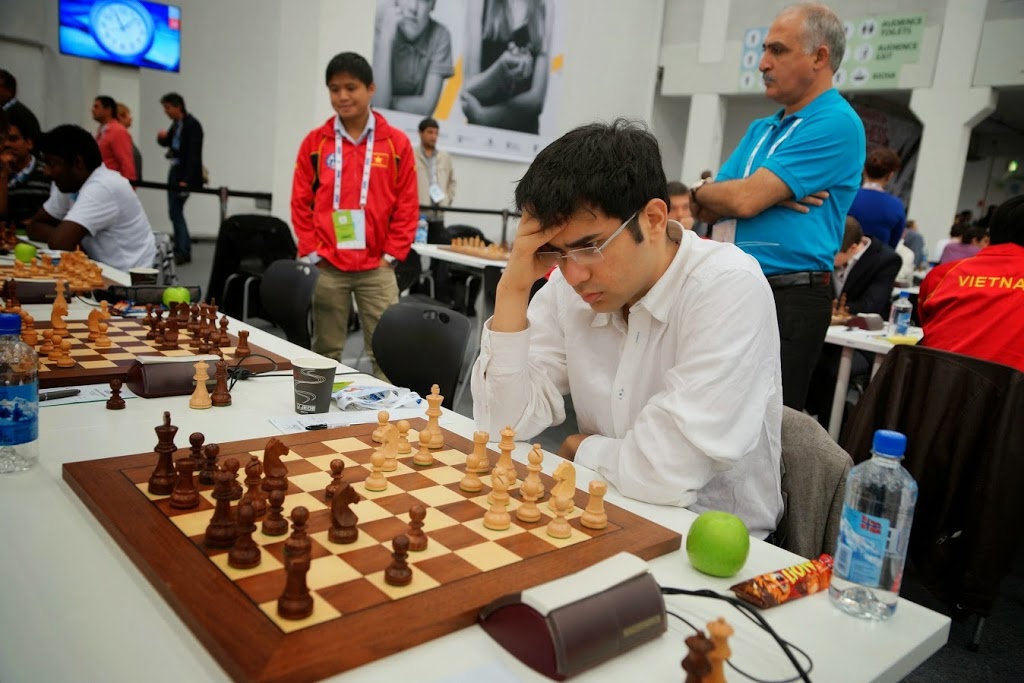
Q&A | Parimarjan Negi India’s youngest-ever Grandmaster on balancing chess and studies, and his future plans
V. Krishnaswamy
I will play less and focus on big events
Parimarjan Negi’s life has not been an ordinary one. He has been playing chess since the age of 4 and has been travelling for it since the age of 7. He was 9 when he won the Asian Youth Under-10 in Tehran, Iran, in 2002.
He became India’s and Asia’s youngest Grandmaster (and the world’s second youngest) at 13 years, three months and 22 days and was Indian national champion in 2010. In 2013, he won the Asian Continental title and, earlier this month, played a stellar role in India’s success at the Chess Olympiad in Tromsø, Norway, where India won a bronze medal for the first time.
Negi did lose to world No.3 Fabiano Caruana of Italy, but he drew with world No.2 Levon Aronian of Armenia and beat former world champion Rustam Kasimdzhanov from Uzbekistan.
After juggling school, chess and travel for 10-odd years, Negi, 21, took two years off from education to focus on his chess, before enrolling for an undergraduate degree in psychology at Stanford University in the US last year. He will join the university next month. Edited excerpts from an interview:
Why academics, especially after your finest moment—a first-ever Chess Olympiad medal?
I didn’t make the decision right now of course; the American college application process is a lengthy one, so I made my plan sometime last year. After I had finished school I was still rather confused about what I wanted to do in life. I certainly didn’t want to pursue a college degree without really attending classes as I had done in school. So I decided to take a couple of years off academics to lead the life of a chess professional and then decide about my future after that. During this time I realized that a single-track career like this wasn’t very appealing to me, and I wanted to explore more in life.
Are there any major examples of how a top player may have combined a chess and academic career?
From the current top youngsters, Wesley So (of the Philippines) has risen to world No.13 despite studying in an American college in the last few years, while there are many examples of Grandmasters ranked in the top 100 also pursuing an academic degree. Besides that, British Grandmaster Luke McShane continued to rise through the world rankings and beat most of the world’s top players, including (Magnus) Carlsen and Aronian, despite studying at Oxford, and later working in the British financial sector. Perhaps the most famous example in academia is the Harvard professor and former chief economist of the International Monetary Fund, Kenneth Rogoff, who was world No.40 at his peak.
Will you continue to play chess while at Stanford? Events like the Asian championships, the Olympiad or world championships?
Definitely I would. Chess is not something you can just decide to stop. But since I will play less than before, I feel I will be able to play with even greater intensity. I will focus on big events, such as the ones you mentioned. I’d particularly like to continue playing for the Indian team. Besides this, I also have American Open events planned for every month in October, November and December. Since they have a shorter format (two rounds a day allow it to finish in five days or less), it’s not a big break from my studies, and it will give me enough of a chance to continue to increase my rating.
You are writing a series of books on chess, a rare thing for an active player. The first one is already out.
I am already particularly theoretical, a bit too much for my level actually. Now that I would have to devote a considerable time to academics, I realized it would be impossible for me to continue updating such sharp and concrete lines constantly for my own play, so I started adapting my opening style to the new challenges. At the same time I did not want my analysis in all the combative lines to go waste, so I decided to put them on paper.
How do you see your chess career four-five years from now?
That seems too far ahead to think right now. I think the educational experience will be very useful in the process of self-discovery, and having a backup career option in academics also reduces the stress to perform in the hyper-competitive world of professional chess.
Source: http://www.livemint.com
“former world champion Rustam Kasimdzhanov”
Memorializing FIDE knockout winners as “world champions” is amusing (pathetic, but amusing).
Wise choice.