

How to raise a brilliant child without screwing them up
Oliver James
The Guardian
Saturday 27 February 2016 01.00 EST
Forget tiger mother techniques, the best way to make sure your children achieve their full potential is to nurture their interest gently, says psychologist Oliver James
Where does the drive to succeed come from? And if it results in exceptional achievement (as defined by external norms such as power, status and wealth) does that have to go hand in hand with being a troubled, agonised person?
The latest evidence suggests that genes play little part – see box below – and that nurture is critical, whether it be carrot or stick. In my case, for instance, purely because I was the only boy with three sisters, I was treated completely differently by my father. Despite my repeated failure at school, he constantly encouraged me to see myself as clever and I eventually did OK. He gave no such encouragement to my sisters in their academic careers (fortunately, my mum did).
I would go so far as to say that, had I been swapped at conception with one of my sisters, she would be writing these words. Each person’s unique history, starting before birth, sets them on particular paths, explaining why siblings differ. Think of yourself as a character in a movie and ask, what’s my backstory?
At the simplest level, performance is nurtured through teaching – for good or ill. I can teach my son his times tables but, equally, if I am a pickpocket by profession, show him how to do that.
….
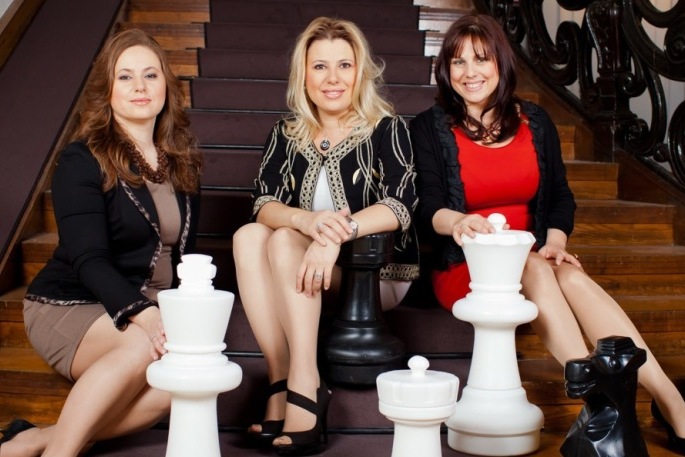
In the 1960s, László Polgár was a Hungarian educational psychologist who had written several scientific papers on the effectiveness of practice in creating excellence. Explaining his passionate convictions to his future wife, Klara, she fell for him as well as his arguments. They chose chess for their experiment because it has an objective metric by which achievement can be measured. Neither were exceptional chess players.
As luck would have it, Klara gave birth to three daughters. There had been no female grandmasters and it was widely assumed that women were genetically incapable of the cognitive skills entailed in exceptional chess, and were consequently excluded from top tournaments.
Starting with his eldest daughter, Susan, Polgár was careful to treat it as a playful activity, turning it into a fantasy of dramatic wins and losses. Whereas Earl and Kultida Woods had coerced perfection from Tiger, the Polgárs encouraged enjoyment,
By the time Susan had turned five, she was excited by playing and spent hundreds of hours practising. She was entered into a local competition and treated it as fun, winning 10-0, causing a sensation.
Meanwhile, her younger sisters were intrigued and László allowed them to feel the pieces, seeing them as toys, with no formal tuition until they were five. Interviewed recently, all three girls described playing the game as something that they loved doing – it never felt like a chore. Instead of messing about playing Monopoly, netball or going to the local swimming pool, chess was just what the Polgár family enjoyed.
Sure enough, in 1991 the eldest daughter became the first female grandmaster. The second daughter had 10 straight wins against male grandmasters, a performance rated the fifth best in the history of chess. Her younger sister became a grandmaster at the age of 15, the youngest ever, of either gender.
Polgár understood that coercion was less valuable than small children’s need to enjoy fantasy play. Consequently, his daughters all seem to have grown into satiable, well-balanced people rather than success addicts.
A strong clue to the dynamics of the Polgár family comes from a fascinating footnote to the story. When the eldest daughter had been crowned as the first female grandmaster, a Dutch billionaire offered to pay for the Polgárs to adopt three boys from a developing nation to show that the experiment could be replicated. They turned him down, Klara feeling they had made their point.
For parents, the implications are clear. Most of us say we just want our offspring to be happy, but most also want them to do well at school and beyond.
Full article here.
Most interesting. Actually, this story of the Polgar family was already known to me. Polgar père was right to introduce the girls to chess as ‘play’ (which of course it is). The educationist A.S. Neill always said that ‘childhood is playhood’ — though I have serious reservations about the school he founded. My own children, two sons, were bereaved of their mother (my wife) at the tender ages of 5 and 3. Right from the start, I determined that they should have as much ‘culture’ as could be. I never spoke to them in kiddy-language, I read good books to them, accustomed them to the sounds of foreign languages, took them to see intelligent films, concerts, exhibitions, etc. Of course, there were some wobbly moments, but they have grown up to be excellent citizens and independent thinkers (even ruthlessly so), have found work that suits them. They are not brilliant, not winning prizes and such, but have become fully human beings and afford me a great deal of pleasure. It can be done and it must be done — especially when the alternatives are so dreadful in this world so full of temptations and ignorance and violence.