Menu   ≡ ╳
  • News
    • Major Tournaments
    • General News
    • USA Chess
  • Puzzles
  • Improvement
  • Event
  • College
  • Scholastic
  • Women
  • Search

        More results...

        Or you can try to:
        Search in Shop
        Exact matches only
        Search in title
        Search in content
        Search in comments
        Search in excerpt
        Search for News
        Search in pages
        Search in groups
        Search in users
        Search in forums
        Filter by Categories

        Try these: Sicilian Defense, Empire Chess, USA Chess

    • SPICE
    • Videos
    • Susan’s Blog
    • About Us
    • Contact Us
    • SPICE
    • Videos
    • Susan’s Blog
    • About Us
    • Contact Us
    Menu   ≡ ╳
    • News
      • Major Tournaments
      • General News
      • USA Chess
    • Puzzles
    • Improvement
    • Event
    • College
    • Scholastic
    • Women
    • Search

          More results...

          Or you can try to:
          Search in Shop
          Exact matches only
          Search in title
          Search in content
          Search in comments
          Search in excerpt
          Search for News
          Search in pages
          Search in groups
          Search in users
          Search in forums
          Filter by Categories

          Try these: Sicilian Defense, Empire Chess, USA Chess

      Home  >  Daily News • General News  >  Battle of the Brains

      Battle of the Brains

      Battle of the Brains, BBC, My Brilliant Brain, National Geographic


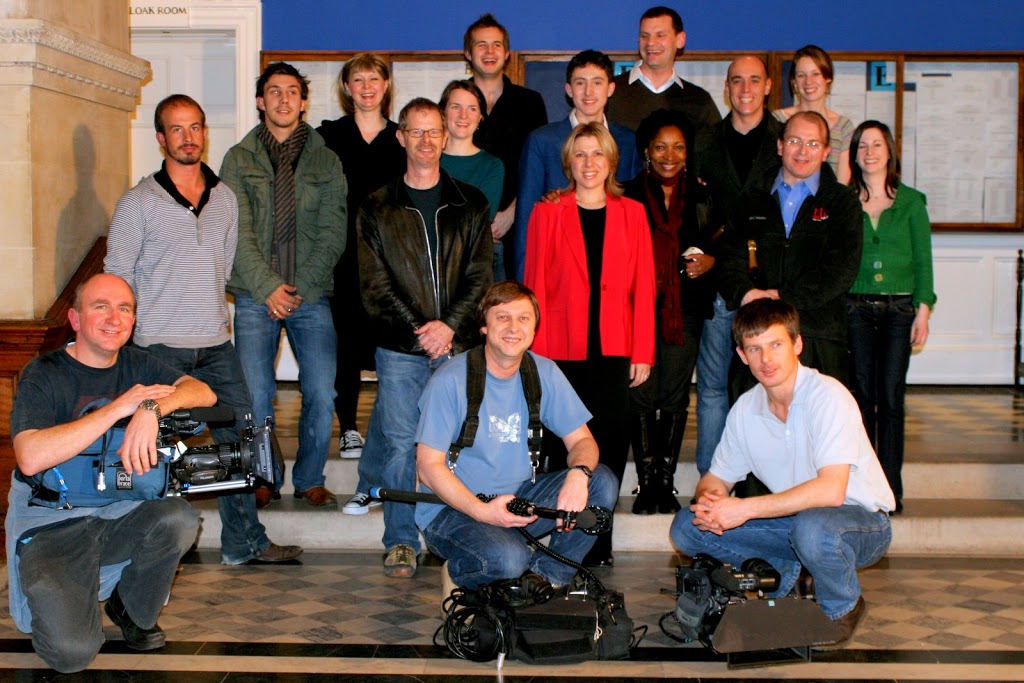
      The contestants and crew of the Battle of the Brains

      The BBC show Battle of the Brains was first shown in the UK in April. In the past week, a number of people have told me that they saw it on the Discovery Channel and the Science Channel in the US.

      Next to come to the US is the National Geographic “My Brilliant Brain” documentary. Click here to see the 6-part preview of the show.

      Posted by Picasa
      Chess Daily News from Susan Polgar
      Previous Article Reshevsky Memorial International at TTU
      Next Article China leads Russia by 2 down the wire

      About Author

      Susan Polgar

      Related Posts

      • National Geographic Chess Documentary “My Brilliant Brain”

        January 8, 2017
      • BBC Vienna Talks: Chess and Negotiations- Susan Polgar talks to Reda El Mawy- BBC Arabic

        July 17, 2015
      • NatGeo “My Brilliant Brain” Documentary

        November 4, 2014

      7 Comments

      1. Anonymous Reply
        August 29, 2007 at 1:45 pm

        It’s a fascinating show. I watched it back in April.

      2. Anonymous Reply
        August 29, 2007 at 5:18 pm

        From recollection, there were 7 contestants in this Battle, but I didn’t hear how you placed.
        Didn’t hear your name in the first five. Still, it wasn’t just about winning, was it?

      3. Kurs Reply
        August 29, 2007 at 11:59 pm

        Not sure if this is the entire segment, but found this at youtube:

        http://www.youtube.com/watch?v=5qOlacRg_w8

      4. Anonymous Reply
        August 30, 2007 at 12:52 am

        On the BBC Horizon show, the joint winners were Bonnie Greer (dramatist et al) and Seth Lloyd (quantum physicist).
        Greer was strong in creativity and emotional intelligence, was best when she stopped trying to be analytical but ‘just let her mind go’.
        “The rest appeared to be rated roughly similar to the rating they received on the IQ test alone”: http://tinyurl.com/25fe46
        SP didn’t feature much in the programme, which suggests she wasn’t doing too well, though she was ok on throwing a ball into a basket while wearing vision-inverting spectacles – as you do.
        I was left with the disappointing feeling that chess time develops skills in chess, but is maybe less effective in developing transferrable skills than I thought.
        You can’t generalise from a statistic of one, but I wondered if John Nunn or even William Hartston, both chess players, mathematicians and writers, would have done better.

      5. Anonymous Reply
        August 30, 2007 at 6:40 am

        I expect chess players to do well in whatever activity where the rules are simple and you are not allowed a pen or pencil (so you calculate a ton of simple moves ahead). So things like multiplying large numbers in their head.

        I do believe that playing a lot of intellectual games like chess can help the mind, but I think you have to play a variety of games and not just one game. Chess sharpens something, but it’s just one thing. You expect an artist to be best at creativity, but an artist who only paints flowers might not be as creative as an artist who does everything. Creativity is helpful in science, but even the most uncreative scientist studies the world around her and you’ll find that nature is very creative – some of the stuff that happens in nature poets couldn’t even dream up! It’s my opinion chess can be helpful but that a variety of games is even better.

      6. Anonymous Reply
        August 30, 2007 at 9:49 am

        Good angle by Anon 2.40.
        As a family, we played many games – multi-player games in which everyone could get involved:
        – games of pure chance (Snakes and Ladders) taught how to deal with triumph and disaster
        – games of skill, chance, but complete information (Monopoly)
        – games of skill/chance and incomplete information (Cluedo, card games, Can’t Stop)
        – two-person games (noughts and crosses, Nim, chess etc)
        The 2-person games don’t teach you to see the situation from others’ points of view.
        Someone should make a shopping list of transferrable skills developable by games, and then rate various games as to how they help.
        The other consideration is the ‘entry cost’ of each game at each level: chess involves a lot of time.
        “Can’t Stop” deserves to be known better. It teaches the importance of not trying to ‘have it all’.

      7. Anonymous Reply
        December 13, 2007 at 11:05 am

        please visit the following websites of school of genius psychologics in India, where an individual is trained to become a genius.

        http://www.schoolofcreativepsychology.com and http://www.geniustemple.com
        http://www.genius-psychologics.com

      Leave a Reply

      Cancel reply

      Improvement

      • Important Scholastic Coaching Tips
      • My Chess Quotes Over The Years
      • My kids know chess rules. What’s next?
      • Chess Parenting

      Events

      • My Top 10 Most Memorable Moments in Chess (Part 3) May 13, 2021
      • My Top 10 Most Memorable Moments in Chess (Part 2) May 12, 2021
      • My Top 10 Most Memorable Moments in Chess (Part 1) May 10, 2021
      • About Susan Polgar April 9, 2021
      • About Us
      • Contact Us
      • Daily News
      • My Account
      • Terms & Conditions
      • Privacy Policy

      Anand Armenia Breaking News Chess Club and Scholastic Center of St Louis Chess interview Chess Olympiad Chess tactic Chess tournament chess trivia China FIDE Grand Prix Holland India Khanty-Mansiysk LIVE games Lubbock Magnus Carlsen Moscow National Championship Norway OnlineChessLessons Philippines Puzzle Solving Russia Scholastic chess Spain SPF SPICE SPICE Cup St Louis Susan Polgar Tata Steel Chess Texas Tech Tromsø TTU Turkey Webster University Wesley So Wijk aan Zee Women's Chess Women's Grand Prix Women's World Championship World Championship World Cup

      April 2026
      M T W T F S S
       12345
      6789101112
      13141516171819
      20212223242526
      27282930  
      « Sep