

Maybe Teach Them Math, Science and Chess
By JAMES WARREN
NY Times
The 120 elementary school children sat so quietly and intently that you might have assumed this was a mass detention period.
But it was chess, not confinement, in an Oak Brook hotel ballroom on Columbus Day. And the lessons learned might assist school leaders everywhere, including those attempting a systemwide resuscitation for Rahm Emanuel, Chicago’s very disciplined, if impatient, mayor.
“My dream is to get in front of education decision makers and convince them to make chess part of the curriculum for K through second grade,” said Susan Polgar, the star of the show. “That’s when thinking patterns and habits are formed. It should be mandatory, like physical education.”
Ms. Polgar, 45, was a Hungarian chess prodigy taught by her psychologist father after she stumbled on chess pieces in a closet at home. At age 4, she stunned Budapest by winning the 11-and-under category in the city championships, sitting on phone books and pillows to reach across the board.
She was the first woman to become a grandmaster and the first to qualify, in 1996, for what was still known as the Men’s World Championship. She was one of the three highest-ranked female players for more than two decades, traveling the world and winding up fluent in seven languages.
I’d made my way to the Susan Polgar Foundation’s World Open Championship for Boys and Girls with an ulterior motive: to explore why boys dominate every class or tournament to which chess-ignorant me has taken my 7-year-old son.
“It’s interesting,” said Ms. Polgar. “Socially, I think, they’re not supported enough, so in general girls drop out of chess by fourth and fifth grades,” she said as 5-to-9-year-olds competed nearby.
When she was a girl, “it was very much ingrained that women were not able to play,” Ms. Polgar said. “A lot of experts and elite players believed that we were not physically able to do it, our brain was not big enough or that we couldn’t keep quiet long enough.”
She became an advocate for girls, especially through the Susan Polgar Foundation, which she founded while living in New York. She’s now in St Louis, MO, with her husband and their two children, where she runs the Susan Polgar Institute for Chess Excellence at Webster University.
The foundation supports chess for boys and girls, but especially girls, and sponsors events nationwide. The institute lures young players, with the university offering scholarships and excelling in college tournaments.
Ms. Polgar’s mantra is that chess teaches discipline, analytical thinking, time management, focus and patience — skills that can be useful throughout life. She cites countries, like Armenia, where chess is either a mandatory part of school curriculums, especially in the early elementary years, or strongly encouraged.
It cuts across socioeconomic divides, exemplified by impressive performances of high-poverty students in Brownsville, Tex., who have whipped privileged Manhattan rivals — “kids who get individual lessons from grandmasters,” she said — and shown how “a boost in self-confidence can change lives.”
Indeed, there is no shortage of hedge fund managers and corporate leaders who are chess players, some of whom link the habits of mind learned at chess with their success. As we fret about China’s economic success, we might note that it’s a growing chess force, including four female world champions in 20 years.
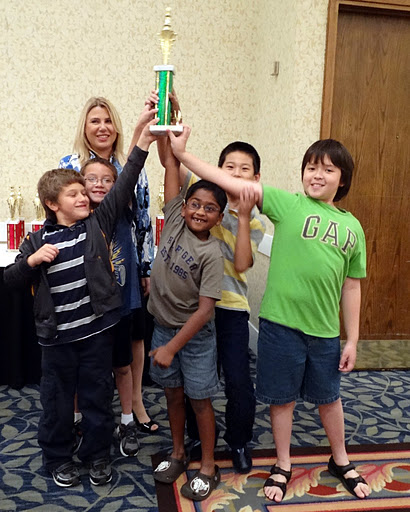
Last week’s tournament in Oak Brook brought children from all over the country; perhaps 70 percent were boys. Many of the children were Asian-Americans, including Ashley Ceohas, 6, of Wilmette, the child of a Chinese-American mother who smilingly swore to me that she was “not a Tiger mom!” as her daughter segued from a chess match to drawing a crowd as she played a nearby piano beautifully.
“She’s aware of there being more boy players,” said her mother, Yijia Ceohas. “But we tell her anything boys can do, girls can do better. And she knows that Susan Polgar’s dad said geniuses are not born but made through hard work.”
My investigation into the gender divide led me to Shiva Maharaj, a private investor who teaches the game throughout the Chicago area, including a free Saturday morning session that my son has attended at the Edgebrook Library on the Northwest Side.
Mr. Maharaj had students competing in Oak Brook and cited an American Girl mentality of parents, referring to the store that sells high-priced dolls and accessories. He sees the parents succumbing to cultural stereotypes of daughters being pretty rather than intellectually empowered.
I’ve watched him teach diverse groups of children, mostly boys, and effectively insist they sit up straight, concentrate, take time to assess problems critically and learn to deal with losing. He offers seemingly creative solutions to challenges faced on the board.
On the heels of the impressive inaugural Chicago Ideas Week, here’s a free idea for its energetic, ambitious promoters: a panel next year on “American Education: Should We Make a Move to Chess?”
Source: http://www.nytimes.com
The solution is to donate money to Garry Kasparov. He needs it.
Nakamura needed it too. He has not been winning any tournament lately so the cofers are dry.
nkokisslainaltdkeBucklesSaying ‘anything boys can do girls can do better’ is also wrong, as it creates hostility and tension. Best say that ‘Girls can do just as well as boys’ when it comes to mental sports.
Kids are very impressionable. You would not want to ruin their innocence through action-packed games or turn them away from education due to traditional and dull education system. Kurt Penberg developed personalized children music, interactive CD story books, personalized poems and growth charts.