Menu   ≡ ╳
  • News
    • Major Tournaments
    • General News
    • USA Chess
  • Puzzles
  • Improvement
  • Event
  • College
  • Scholastic
  • Women
  • Search

        More results...

        Or you can try to:
        Search in Shop
        Exact matches only
        Search in title
        Search in content
        Search in comments
        Search in excerpt
        Search for News
        Search in pages
        Search in groups
        Search in users
        Search in forums
        Filter by Categories

        Try these: Sicilian Defense, Empire Chess, USA Chess

    • SPICE
    • Videos
    • Susan’s Blog
    • About Us
    • Contact Us
    • SPICE
    • Videos
    • Susan’s Blog
    • About Us
    • Contact Us
    Menu   ≡ ╳
    • News
      • Major Tournaments
      • General News
      • USA Chess
    • Puzzles
    • Improvement
    • Event
    • College
    • Scholastic
    • Women
    • Search

          More results...

          Or you can try to:
          Search in Shop
          Exact matches only
          Search in title
          Search in content
          Search in comments
          Search in excerpt
          Search for News
          Search in pages
          Search in groups
          Search in users
          Search in forums
          Filter by Categories

          Try these: Sicilian Defense, Empire Chess, USA Chess

      Home  >  Daily News  >  Amazing Solo Act

      Amazing Solo Act

      Breaking News


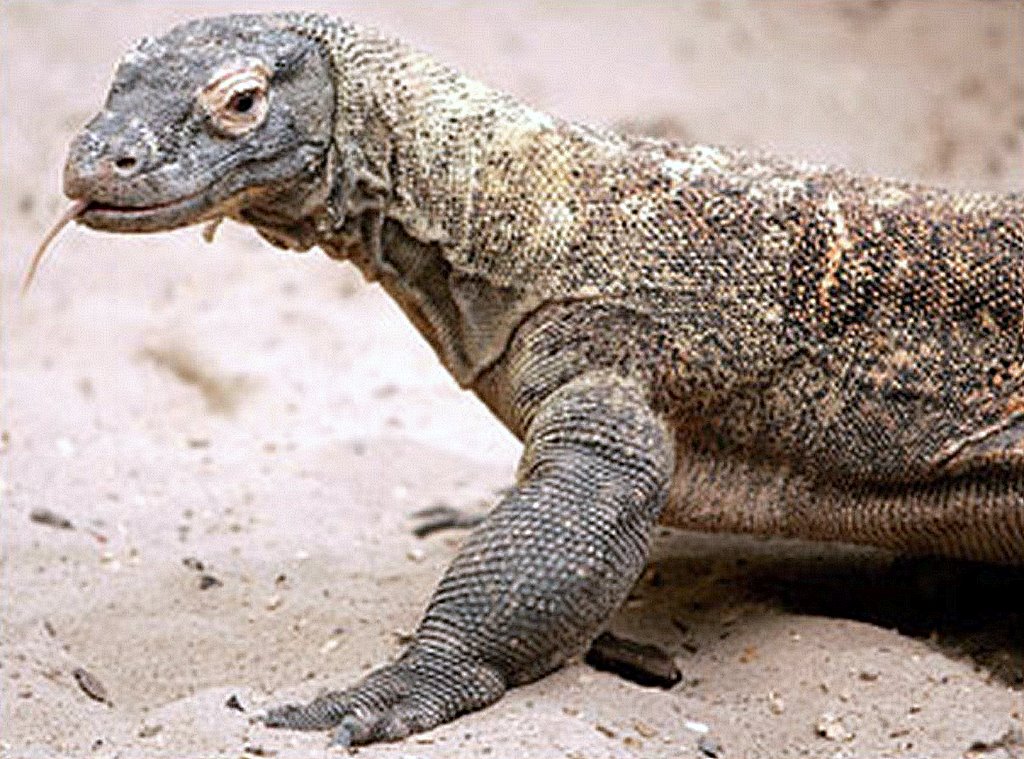
      Virgin Birth on Way for Komodo Dragon
      One of Two Such Cases Known for Animal
      By MARIA CHENG
      AP

      CHESTER, England (Jan. 19) – In an evolutionary twist, Flora the Komodo dragon has managed to become pregnant all on her own without any male help. She is carrying seven baby Komodo dragons.

      “We were blown away when we realized what she’d done,” said Kevin Buley, a reptile expert at Flora’s home at the Chester Zoo in this town in northern England. “But we certainly won’t be naming any of the hatchlings Jesus.”

      Other reptile species reproduce asexually in a process known as parthenogenesis. But Flora’s virginal conception is the second documented in a Komodo dragon. The first was earlier this year at the London Zoo.

      The reptiles, renowned for their intelligence, are native to Indonesia. They are the world’s largest lizards and have no natural predators – making them on par with sharks and lions at the pinnacle of the animal kingdom.

      Here is the full story. Posted by Picasa

      Chess Daily News from Susan Polgar
      Previous Article Everything you need to know about the 2007 WC in Mexico City
      Next Article Chess poem by a 13 year old Australian

      About Author

      Susan Polgar

      Related Posts

      • FM Saeed Ishaq shocks another grandmaster at Dubai Open Chess Championship

        April 9, 2015
      • King’s Indian for Black – IM David Vigorito … and more

        January 26, 2015
      • Faceless opponents

        December 27, 2014

      3 Comments

      1. Anonymous Reply
        December 21, 2006 at 2:39 am

        How is this possible?

      2. Anonymous Reply
        December 21, 2006 at 8:25 am

        nature find a way!!!

      3. Arne Vogel Reply
        January 8, 2007 at 7:19 pm

        How parthenogenesis evolves is still unclear, but natural hybridization is often involved (when a male and a female from different but closely related species reproduce). The genetic material of the offspring comes from the mother, but is typically not identical because most species have pairwise chromosomes, and eggs can thus have a different combination of chromosomes for each of these pairs (e.g. if the mother has chromosomes AB, then every egg will have AA, AB or BB). In some species such as Komodo dragons, the offspring inherits only one chromosome per pair, which is doubled (i.e. AB is impossible.) In other species, gene splicing can also “mix things up” to an extent by forming a chromosome that contains some genes from A and some from B.

        Male Komodo dragons, unlike men, have two identical sex chromosomes (called ZZ), whereas females have two different ones (called WZ). Parthenogenic offspring of a KD female will thus all be ZZ (male) or WW. The latter is a non-viable combination of sex chromosomes – these eggs are formed but die off. So parthenogenic offspring in KDs is all male and parthenogenic reproduction for more than one generation is not possible (although the males can still reproduce sexually). Some scientists believe that parthenogenesis is quite common in KDs, and this would help explain why male dragons outnumber females 3:1.

        In other species, females have two identical sex chromosomes, or mixed chromosome pairs are possible, and so at least some parthenogenic offspring can itself reproduce asexually. In some even rarer species, all females reproduce this way and there are no males at all. Since there is no genetic exchange, the genetic pool grows very small and the descendants will be genetically very similar to their mothers, just like clones. Interestingly, in some lizard species with only parthenogenic reproduction the females will imitate male mating rituals (which are known from closely related, sexual species) with other females. The one playing the female role is not fertile otherwise, or markedly less fertile. Still, no genetic material is exchanged.

        New parthenogenic species should be assumed to form constantly while others go extinct. The fact that parthenogenesis (at least pure parthenogenesis) is so rare is testament for the long term benefits that sexual reproduction has for a species’ genetic diversity. (See Wikipedia for a great amount of detail.)

      Leave a Reply

      Cancel reply

      Improvement

      • Important Scholastic Coaching Tips
      • My Chess Quotes Over The Years
      • My kids know chess rules. What’s next?
      • Chess Parenting

      Events

      • My Top 10 Most Memorable Moments in Chess (Part 3) May 13, 2021
      • My Top 10 Most Memorable Moments in Chess (Part 2) May 12, 2021
      • My Top 10 Most Memorable Moments in Chess (Part 1) May 10, 2021
      • About Susan Polgar April 9, 2021
      • About Us
      • Contact Us
      • Daily News
      • My Account
      • Terms & Conditions
      • Privacy Policy

      Anand Armenia Breaking News Chess Club and Scholastic Center of St Louis Chess interview Chess Olympiad Chess tactic Chess tournament chess trivia China FIDE Grand Prix Holland India Khanty-Mansiysk LIVE games Lubbock Magnus Carlsen Moscow National Championship Norway OnlineChessLessons Philippines Puzzle Solving Russia Scholastic chess Spain SPF SPICE SPICE Cup St Louis Susan Polgar Tata Steel Chess Texas Tech Tromsø TTU Turkey Webster University Wesley So Wijk aan Zee Women's Chess Women's Grand Prix Women's World Championship World Championship World Cup

      May 2026
      M T W T F S S
       123
      45678910
      11121314151617
      18192021222324
      25262728293031
      « Sep