
CHESS PRODIGIES: PAUL MORPHY AND JOSÉ RAÚL CAPABLANCA
Chess Prodigies: Paul Morphy and José Raúl Capablanca
“Nowadays, when you’re not a grandmaster at 14, you can forget about it.”
This is a famous quote by Viswanathan Anand, an Indian Grandmaster. Anand started playing chess at an early age and was able to secure the title of Grandmaster in 1988, when he was 18 years of age.
The phenomenon that Anand is referring to is that of chess prodigies. This term is used to refer to children who are able to compete and win, playing against masters and even grandmasters at a professional level.
Chess is one of the few sports in the world that allows children to compete with adults at the same level. This is possible because the nature of the game is purely mental; therefore, age is not the criteria to play chess. This characteristic of chess makes it possible to identify prodigies.
As is being increasingly said these days, emotional quotient is more important than intelligence quotient. This factor plays a significant role in the career development of chess prodigies. As these players are very young, it makes them vulnerable to psychological pressure. The world focuses more on these young players and associates huge expectations with them. Often, child prodigies are not able to respond accordingly. Some are able to grow and evolve in their adult career life as well whereas others are not able to continue in this career path.
Chess prodigies have been found in history throughout but authentic documentation began in the 1800s. Two of the early chess prodigies include Paul Morphy and José Raúl Capablanca. Let us get to know them briefly.
Paul Morphy
Paul Morphy was an American chess player who was born in 1837. Morphy is known to be the best chess player of his time. In his childhood, Morphy used to observe chess games of other players. His uncle, Ernest Morphy, was a famous chess player himself. Morphy’s family recognized his talent when the child commented on his uncle’s defeat and showed him how he could have won the match.
From then on, Morphy was encouraged to play chess and he subsequently won several competitions. He was considered the best player in New Orleans when Morphy was nine years of age. At the age of 12, he took on Johann Lowenthal, a Hungarian chess master and defeated him twice. By the age of 21, Morphy’s skills were famous all over the world.
Jose Raul Capablanca praised Morphy’s play in the following words, “Morphy gained most of his wins by playing directly and simply, and it is simple and logical method that constitutes the true brilliance of his play, if it is considered from the viewpoint of the great masters.”
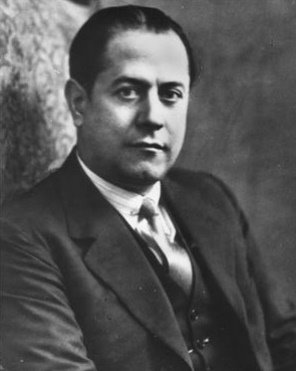
Jose Raul Capablanca
Capablanca, a Cuban chess player born in 1888 shares a similar story to that of Morphy. Capablanca also learnt chess by observing other players. His interest in chess began at the age of four, when he corrected a wrong move made by his father. Capablanca played in the Havana Chess Club at the age of eight. In 1901, he came close to beating Juan Corzo, who was the Cuban Chess Champion of that time.
Next year, Capablanca was able to secure a fourth position out of six in the National Championship. In 1909, Capablanca was one of the top class players in the USA. From the year 1921 until 1927, Capablanca stayed the World Chess Champion.
Max Euwe, the Dutch chess Grandmaster appreciated this great chess prodigy in the following words, “The essence of Capablanca’s greatness is his rare talent for avoiding all that can complicate or confuse the conflict.”
In this era, we can also find chess prodigies that delight the world with their play. However, the skills of Morphy and Capablanca are yet to be outdone.
Source: http://bettor.com

Morphy was better.
Morphy was great,Capablanca was great and Bobby was great. Some Russian once commented on Bobby’s play being ‘simple’;well that was a measure of his enormous talent.