

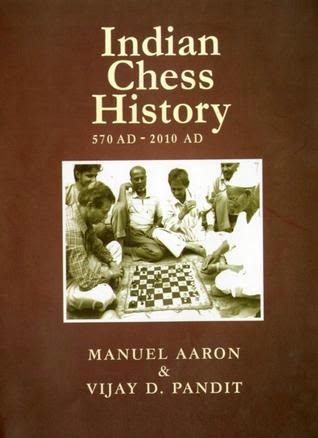
A comprehensive history in black and white
P. K. AJITH KUMAR
A little over a year ago at Hyatt Regency in Chennai, while covering the World Chess championship, you would often run into Norwegians — journalists, authors and players. There was a large contingent of them.
At least a couple of Norwegian television channels were beaming live reports frequently from the venue for their audiences back home. Chess, the journalists said, had suddenly caught the imagination of Norway, because a Norwegian, the young and handsome Magnus Carlsen, was playing in the World championship for the first time. The Norwegian Chess Federation president, who landed just in time to witness the coronation of Carlsen, said all the chessboards in Oslo had been sold out.
One could understand the frenzy. India had gone through the same experience, a couple of decades ago, when Viswanathan Anand, the man Carslen defeated in Chennai, revolutionised chess in the country, as he began his incredible journey to five World titles.
Anand’s stunning exploits on the global arena, from the late 1980’s, had inspired thousands of parents to teach their children this intriguing game played over 64 black-and-white squares. They did not have to regret their decision. Their kids flourished in chess and India became one of the strongest nations in the mind sport.
You could make a comfortable living by being a player of chess in India these days. Most of our top players are also employed by the Government or the public sector companies. But, Ramdas Gupta, who played remarkably well for India at the Moscow Chess Olympiad, in 1956, lost his job — as an accountant with a merchant in Kanpur — because he played chess.
He was sacked by his employer by the time he returned from Pune after winning the National championship in 1957. He stopped playing in tournaments after that.
Anecdotes like this make the book interesting reading. The short biographies of several unsung heroes like Gupta and the detailed accounts of the growth of chess in the country, backed up by statistics, make it an important book in Indian sport. The large number of annotated games, of players of varying skills through centuries, make it a useful book to those who view chess as something more than a mere hobby.
Running into 600 pages, it is a huge book. It has to be, when you have to record the history of the game through 16 centuries.
The strength of the book is its comprehensiveness. Just about everything about chess in India has been touched upon by the authors Manuel Aaron, India’s first International Master in chess, and Vijay D. Pandit, a chess historian.
Most of India’s finest players, right from the early days till the present time, are featured. There are also write-ups about the likes of versatile S. Balachander, the director, who was also an actor and Veena maestro. He was also a chess prodigy who had scored some astonishing wins at the age of nine, before he chose music ahead of chess a year later.
The tragic tale of Kerala player A. Sasidharan is also there. A gifted player, he had committed suicide, at the age of 24, reportedly because of his failure at the National ‘B’ chess championship of 1980 and his inability to get a job. A game featured in the book alone would tell you how imaginative a player he was.
There is also plenty of information about most of the important tournaments that have been played in the country. Enough space has also been devoted to chess history of different States such as Tamil Nadu, Maharashtra and Punjab.
Organisers and patrons of chess such as Solar Subramaniya Iyer, N. Mahalingam, and K. Sai Prakash (who was also a National junior champion), are also remembered. Some vintage pictures, especially of the very young Anand, embellish the book. There are though a few areas you wish the writers had researched more, rather than relying on sources such as Wikipedia, the online encyclopaedia whose inherent weakness is that it can be edited by anyone, not just subject experts alone.
The book is written fairly well, but it could still do with more careful editing. And you would have wanted to read more about the biggest controversy ever in Indian chess — cheating by some players who possibly used computer assistance during their games.
But, these are omissions you would rather pardon, when you consider the massive effort the two authors must have put in over a few years to document the fascinating history of Indian chess.
Source: http://www.thehindu.com
Anand is the best.