

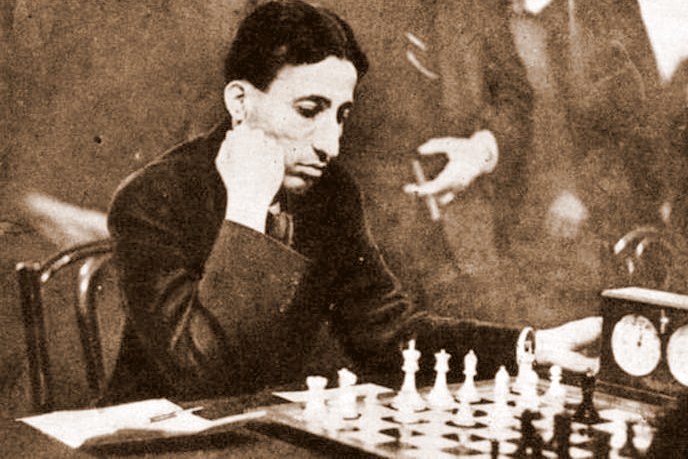
The tragic tale of Mir Sultan Khan, Asia’s first chess Grandmaster
The colonial period in India was a dark and gloomy one. And strictly from a sporting point of view, the nation’s successes during that time were quite limited. The only shining light from the pre-1947 period is the Indian hockey team, which won six Olympic gold medals in a row from 1928 to 1956. Not far behind is the iconic Mohun Bagan side from 1911, as they created history by defeating the East Yorkshire Regiment to become the first Indian club to win the IFA Shield.
Somewhere between these two stories, there is the tragic yet awe-inspiring tale of a humble manservant named Mir Sultan Khan, who took the world of chess by storm with his flair and flamboyant play, as he beat the greatest players of his time and reached the pinnacle of the sport. He defeated some former world champions on the 64-square battlefield and produced some truly magical games in the process, despite facing some serious limitations.
Humble beginnings and astonishing successes
Khan was born in 1905 in Sargodha, Punjab which is situated in modern-day Pakistan. He learned the Indian form of chess from his father at the young age of nine, which was slightly different from the modern version played around the world. It had different rules with respect to pawn promotion and stalemates, and each pawn could only be advanced one square in its first move. Khan worked as domestic help in the house of Sir Umar Hayat Khan, where he ran daily errands for his royal master.
His first breakthrough came when he was 21 years of age as he was adjudged the strongest player in the state, after which Sir Umar decided to take him under his patronage and teach him the European version of the game. Just two years later, Khan won the All-India Championships with a remarkable score of 8.5 points of a possible nine.
Sir Umar then decided to take Khan to London, where he trained with some British masters and subsequently entered the British Chess Championship. Khan would go on to win the tournament three times in 1929,1932 and 1933 in a total of four attempts.
He also participated in tournaments all across Europe 1929 onwards, where he placed second and third in quite a few, and that too behind names such as Jose Raul Capablanca, Alexander Alekhine and Max Euwe – all past or future World Champions.
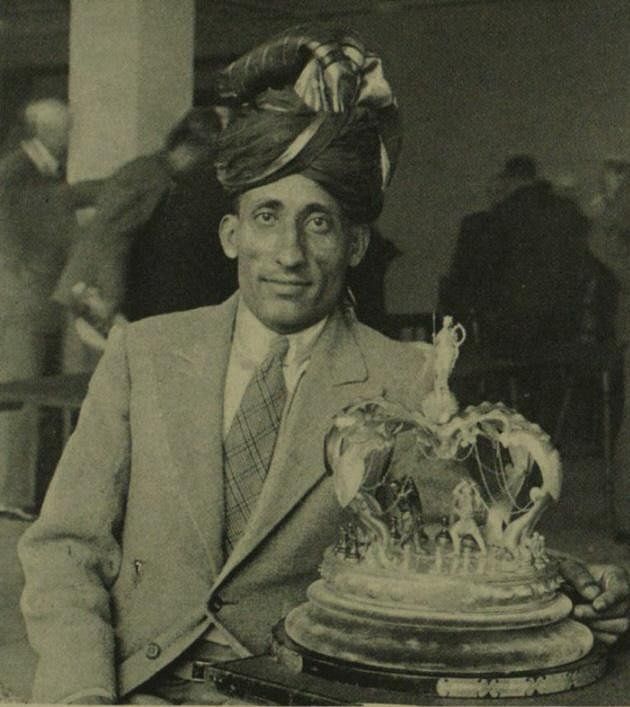
Big hurdles to overcome
What makes Khan’s story so unique and inspirational is the fact that being a simple servant, he could not read and write, and was unable to speak and understand English. This meant that he was not well-versed with the vast amount of chess theory and literature that all his opponents knew almost by heart. Training him in England was a serious challenge due to the language barrier, and he consequently had a hard time learning the international rules of the game and its nuances.
Another obstacle that Khan faced in foreign lands was the weather, as he was unable to adapt to the outside conditions. Finding it very difficult to acclimatise to the English cold, Khan constantly suffered from a cold or influenza, which was obviously a serious impediment in his training and preparation.
It is said that whenever he came up to play a match, he would always be wrapped up in a warm muffler along with a big Punjabi turban on his head.
In spite of all these drawbacks, Khan managed to play some of the greatest chess the world has ever seen. He is often referred to as ‘the greatest natural player of modern times’ because he heavily relied on his instinct and intuition to make his moves, thanks to his scarce knowledge of chess theory. While his openings were sometimes distant from the theoretical ones, he covered for them with some world-class endgame skills. His drive, determination and passion for chess are an inspiration for everyone and go on to show that nothing is impossible if one has faith in one’s own abilities.

Fading into obscurity
Khan’s international career was a short-lived one and lasted just five years, with Sir Umar taking him back to India in December 1933. In 1935, Khan claimed victory against V.K. Khadilkar in a ten-game matchup, where he yielded just one draw and won all the remaining games. After this, he returned to serving his ‘master’ and never played the game again.
Playing chess in inhospitable weather conditions had eventually made him feel like he was caged, leading him to give up the sport once and for all. He grew disillusioned with chess as Ather Sultan, his eldest son, recalled that he refused to coach his children at chess and told them to do something more useful with their lives.
He later died of tuberculosis in 1966 in complete obscurity – a sad end to one of the game’s most brilliant minds.
FIDE, the official governing body of chess, gave many long-retired players formal retrospective titles in 1948, but it inexplicably chose to omit Khan at the time. He was subsequently forgotten and continues to remain a relatively unknown figure in the sport’s illustrious history.
Despite the snub, he is widely regarded as the first grandmaster from Asia by his contemporaries and will go down in the history books for his style of play and how he overcame all odds to reach heights quite unimaginable at the time.
Source: http://www.sportskeeda.com
Leave a Reply