Menu   ≡ ╳
  • News
    • Major Tournaments
    • General News
    • USA Chess
  • Puzzles
  • Improvement
  • Event
  • College
  • Scholastic
  • Women
  • Search

        More results...

        Or you can try to:
        Search in Shop
        Exact matches only
        Search in title
        Search in content
        Search in comments
        Search in excerpt
        Search for News
        Search in pages
        Search in groups
        Search in users
        Search in forums
        Filter by Categories

        Try these: Sicilian Defense, Empire Chess, USA Chess

    • SPICE
    • Videos
    • Susan’s Blog
    • About Us
    • Contact Us
    • SPICE
    • Videos
    • Susan’s Blog
    • About Us
    • Contact Us
    Menu   ≡ ╳
    • News
      • Major Tournaments
      • General News
      • USA Chess
    • Puzzles
    • Improvement
    • Event
    • College
    • Scholastic
    • Women
    • Search

          More results...

          Or you can try to:
          Search in Shop
          Exact matches only
          Search in title
          Search in content
          Search in comments
          Search in excerpt
          Search for News
          Search in pages
          Search in groups
          Search in users
          Search in forums
          Filter by Categories

          Try these: Sicilian Defense, Empire Chess, USA Chess

      Home  >  Chess Improvement • Daily News • General News  >  Positional chess understanding

      Positional chess understanding

      ChessCafe, Mark Dvoretsky


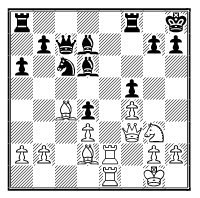
      This is the position I showed yesterday on this blog. Below is the analysis done by world famous chess author IM Mark Dvoretsky for www.ChessCafe.com.

      The Worst-Piece Principle

      Secrets of Positional Play, by M. Dvoretsky and A. Yusupov (the fourth volume in our series, “School of Chess Excellence”) contains a lecture by Alexei Kosikov, entitled “Constructing a Plan in the Game of Chess.” In this lecture, Kosikov formulated his “worst-piece principle.”

      In situations involving strategic maneuvers (when the time factor is not of decisive importance), look for the piece which stands worse than the others. Making this piece more active will often turn out to be the surest way to improve your position as a whole.

      Offered for your consideration: a small selection of examples where using the worst-piece principle makes it easier to search for the strongest continuation. Some may wish to train themselves in the use of this technique: for them, the question mark beneath the diagrams (right after the indication of whose turn it is to move) denotes that the position would be a good one to use as an exercise.

      White needs to get his knight involved in order to increase the pressure; currently, the knight does not stand well. Its place is at g5, coordinating with White’s light-squared bishop, rooks and queen.

      19.Ng3-h1!! Ra8-e8 20.Nh1-f2+/=

      This is the position that occurred in the game (by transposition of moves – in the actual game, the white rook was on f1, and the black bishop on c8; after 18.Rfe1 Bd7, the diagrammed position was reached. The actual move order was 18.Nh1! Bd7 19.Nf2 Rae8 20.Rfe1.
      It’s not a simple matter to decide which of two move orders is better, and I generally try to avoid using exercises with more than one possible solution. In the interests of improving an exercise’s quality, a trainer has the right to alter the position slightly, which I sometimes do.)

      Note that in my demonstration of the rest of the game, I go from full notation to abbreviated notation. This is not accidental. A trainer should indicate, as much as possible, the boundary between the answer to the exercise (the moves that must be found) and further illustrative variations. This I do with the help of a change in notation.

      Here is the full analysis from world famous author IM Mark Dvoretsky.

      Posted by Picasa
      Chess Daily News from Susan Polgar
      Previous Article Macworld Chess
      Next Article Hungarian Chess Federation denounces organizer

      About Author

      Susan Polgar

      Related Posts

      • In Memoriam Mark Dvoretsky

        October 2, 2016
      • RIP Mark Dvoretsky

        September 27, 2016
      • A Man with a Noble Cause

        June 3, 2014

      3 Comments

      1. Anonymous Reply
        April 10, 2009 at 5:24 pm

        This is very helpful. Thank you.

      2. Yancey Ward Reply
        April 10, 2009 at 5:31 pm

        I see I wasn’t completely clueless.

        I still like a3 first, though. But then that is why I am an amateur rather than a master.

      3. Anonymous Reply
        April 11, 2009 at 5:30 am

        Toga likes a3 first too. The knight manuever comes later in the main line.

      Leave a Reply

      Cancel reply

      Improvement

      • Important Scholastic Coaching Tips
      • My Chess Quotes Over The Years
      • My kids know chess rules. What’s next?
      • Chess Parenting

      Events

      • My Top 10 Most Memorable Moments in Chess (Part 3) May 13, 2021
      • My Top 10 Most Memorable Moments in Chess (Part 2) May 12, 2021
      • My Top 10 Most Memorable Moments in Chess (Part 1) May 10, 2021
      • About Susan Polgar April 9, 2021
      • About Us
      • Contact Us
      • Daily News
      • My Account
      • Terms & Conditions
      • Privacy Policy

      Anand Armenia Breaking News Chess Club and Scholastic Center of St Louis Chess interview Chess Olympiad Chess tactic Chess tournament chess trivia China FIDE Grand Prix Holland India Khanty-Mansiysk LIVE games Lubbock Magnus Carlsen Moscow National Championship Norway OnlineChessLessons Philippines Puzzle Solving Russia Scholastic chess Spain SPF SPICE SPICE Cup St Louis Susan Polgar Tata Steel Chess Texas Tech Tromsø TTU Turkey Webster University Wesley So Wijk aan Zee Women's Chess Women's Grand Prix Women's World Championship World Championship World Cup

      April 2026
      M T W T F S S
       12345
      6789101112
      13141516171819
      20212223242526
      27282930  
      « Sep