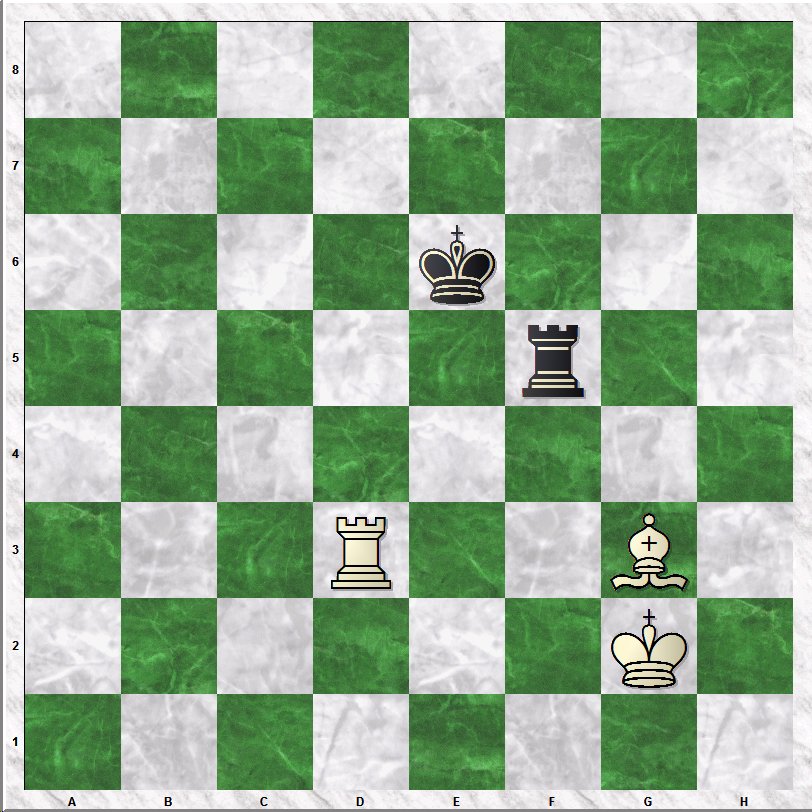
GM Sharavdorj vs. IM Friedel from the 2006 FIDE Swiss at the East Bay Chess Club in Oakland, CA.
It is White to move. Do you know how to draw this type of position as Black?
Chess Daily News from Susan Polgar

GM Sharavdorj vs. IM Friedel from the 2006 FIDE Swiss at the East Bay Chess Club in Oakland, CA.
It is White to move. Do you know how to draw this type of position as Black?
Hello Susan?
Do you give the answers of this type of questions in your blog? When we can’t find the solution we would learn from your explanations. If you give the solution for example one day after here in comments it would teach us a lot.
Thanks a lot,
happy holidays,
Montrealer
keep king and rook on white and try to trade rooks when the black rook is on the same rank or file as the King?????
Montrealer, I would give the answer if no one solves it correctly. The good thing is someone always give a correct answer for the puzzles. You just have to work and see which is the correct one?
Best wishes,
Susan Polgar
http://www.PolgarChess.com
I have no idea. Endgames are by far the weakest portion of my game.
Time to start studying….
(Or maybe order one of Susan’s new videos…. 🙂 )
Keep your King in the center.
And your rook close to it.
Thats my recepie.
Michael, please explain your theory about white squares. I’ll only say: Avoid black corners if you get squared in this endgame. And don’t let your opponent sing Elvis Presleys “Your so Squared” !
If you are black, keep your rook on the third rank, dividing Black and White kings and preventing White King to come close. No?
ok basically the drawing idea if i remember correctly is to keep the rook away from the center and check from a distance (vertically behind the strong side king
)….and when the white king decides to go to one side of the board you go to the other.
the defending rook will stay on d or e file and thus cut the strong king off from one half of the board and when the bishop gets behind the king to allow it access to the other side of the board you simply move your rook up one rank keeping the pin and this keeps the enemy king from approaching the sixth rank to deliver mate.
i did a database search and Flohr-Reshevsky 1937 is a good example of this.
John Nunn’s excellent and highly readable ‘Secrets of Pawnless Endings’ give a review of KRBKR, Chapter 7. He says that the endgame is theoretically a ‘general draw’ but that many defences otb drift into marginal positions which they lose.
In section 7.1, he cites two drawing approaches, the ‘Cochrane Defence’ and the less well-known, analysed and played ‘Second Rank Defence’. Neither seem imminently needed in this drawn position. The attacker’s problem is that it cannot swap off Rooks.
Only 2 of 74 otb examples reviewed by JN were lost in theory: many more were lost in practice. This is an example of why the ‘awarded draw’ rule in the Kramnik-FRITZ match was a major concession to the human player.
So in summary, my advice on drawing this position is to buy Nunn’s book (either edition) and read it more thoroughly than I have 🙂
g
It is a draw but not easy as top GM’s have lost. However mostly it is a draw if you know already what to do.
Black has Black squared bishop in example given.
1.You need to defend for 50 moves so do not forget to claim draw when time arrives!
2.Be careful with time management. Any ending can be lost in a time scramble.
3.Keep the King in the centre of as long as possible.
4.Be aware of gaining moves by opposing rooks, pining Bishop etc but do NOT play for checks if it just helps attacker move forwards and puts your king in a box.
5. Possibly you will be forced to go to an edge of board at some point so do not panic.
6.When King goes to edge-lets say the a-file (say a6). The rook should be on b file (say b3) i.e. 2nd rank.
7.Notice that rook (b3) opposite colour from Bishop so no discoveries.Also notice King moved towards white corner so if King can go to b7 without being boxed by Bishop.
8. King can then go to b5+b4 or if Black rook goes to b8 King can go to b7. There is simply no forced mating pattern that works here .
9.There is a stalemate motif that if Kings in opossition one file apart the defender (rook already on 2nd rank) plays rook with check -if bishop takes then stalemate.
stay off of black squares — and exchange rooks — and use 50 move rule
This comment has been removed by a blog administrator.
i’ll give you my “line of horror” or – HOW NOT TO PLAY THIS ENDGAME on the weaker side – in PGN
(i did a similar analysis a few years ago – with the help of fritz 2 or so – and i’ve tried to adopt it for the given position and translate the comments and notation to english – hopefully there aren’t too much transposing errors and the file will work!?)
have fun ^^ – and find stronger moves than me and fritz one or two (i do not remember exactly). 😉
[Round “endgame B+R vs.R”]
[White “N”]
[Black “N”]
[Result “*”]
[Annotator “Vohaul”]
[SetUp “1”]
[FEN “8/8/4k3/5r2/8/3R2B1/6K1/8 w – – 0 1”]
1. Rd6+ Ke7 2. Rg6 Kf7 3. Rb6 Rf6 4. Rb4 Ke6 5. Bf4 Kf5 6. Kf3 Kg6 7. Ke4 { moving around on white squares let the white king come closer…)} Rf7 8. Rb3 Rf8 9. Be5 Kf7 10. Rb7+ Ke6 11. Rb6+ Kf7 12. Kd5 Rd8+ 13. Bd6 Ra8 $2 (13… Kf6 $1 14. Ke4 Rg8 15. Bc5+ Kg5 16. Be7+ Kg4 17. Rf6 Kh3 (17… Re8 18. Rf7 Kg3 19.
Rg7+ Kf2 20. Rh7 Ke2 {
the pinned bishop gives black time to escape with the king})) 14. Rb7+ Kg6 $6 { the next inaccuracy…} (14… Kf6 15. Be5+ Kf5 16. Rf7+ Kg6 17. Rf2 Ra4 18. Ke6 Kg5) 15. Ke6 $1 Ra4 16. Re7 Kg5 (16… Ra6 17. Rd7 Ra8 18. Rf7 Ra6 19. Rf8 Ra7 20. Rb8 Ra6 21. Rg8+ Kh7 22. Rg1 Kh6 23. Ke5 Ra5+ 24. Kf6 Kh5 25. Be5 Kh4 26. Kf5 Ra3 27. Bd4 (27. Rg7 Rf3+ 28. Bf4 Kh3 29. Rg4 Ra3 30. Rg6 Rf3) 27…
Ra4) 17. Rg7+ $1 Kh6 18. Kf6 Ra6 (18… Ra5 19. Bf4+ Kh5 20. Be5 Kh6 21. Rd7 Kh5 22. Kf5 $1 Ra6 23. Rd3 Ra4 24. Rg3 Kh4 25. Rf3 Kh5 26. Rh3+ Rh4 27. Rg3 Ra4 28. Rg7 Ra6 29. Bc7 $1 {the winning move! NO check on a5…}) 19. Rd7 Kh5 20. Kf5 Ra5+ 21. Be5 Ra6 22. Rd2 Ra4 23. Rd8 (23. Rh2+ Rh4 24. Rg2 Ra4 25. Rg7 Ra6 26. Rg3 Ra4 27. Bc3 Kh4 28. Rd3 Kh5 29. Rd7 Kh4 30. Be5 Kh3 31. Rd2 Ra2 32. Rxa2 Kh4 33. Rh2#) 23… Ra6 24. Bc7 {the winning move! no check on a5!} Rg6 25. Rh8+ (25. Bf4 $2 Rg5+ $1 26. Kf6 Rg6+) 25… Rh6 26. Rg8 Rc6 (26… Ra6 27. Rg7 Rc6 28. Rg2 Rc5+ 29. Be5 Rc4 30. Rg5+ Kh4 31. Rg7 Kh3 32. Rg3+ Kh4 (32… Kh2 33. Rg4+ Kh3 34. Rxc4) 33. Rd3 Rc5 34. Rd2 $18) 27. Rg2 Rc5+ 28. Be5 Rc4 29. Rg5+ {the must avoid position – pattern – if you want to hold this endgame Rook vs. Rook+Bishop} Kh4 (29… Kh6 30. Rg8 {with mate in a few moves}) 30. Rg7 Kh3 31. Rg3+ Kh4 32. Rd3 $1 {precision is needed!} Rc5 33. Rd2 { the bishop takes the field c3 away from the defending rook} Rxe5+ { black has nothing better} 34. Kxe5 $18 {with an elementary win} *
No, I don’t.
my given pgn did not work – so – i’ll give it again… sorry! now it should work! (a short response would not be a bad idea! thx)
[Event “endgameB+Rvs.R”]
[White “?”]
[Black “?”]
[Result “*”]
[Annotator “Vohaul”]
[SetUp “1”]
[FEN “8/8/4k3/5r2/8/3R2B1/6K1/8 w – – 0 1”]
1. Rd6+ Ke7 2. Rg6 Kf7 3. Rb6 Rf6 4. Rb4 Ke6 5. Bf4 Kf5 6. Kf3 Kg6 7. Ke4 { moving around on white squares let the white king come closer…)} Rf7 8. Rb3 Rf8 9. Be5 Kf7 10. Rb7+ Ke6 11. Rb6+ Kf7 12. Kd5 Rd8+ 13. Bd6 Ra8 $2 (13… Kf6 $1 14. Ke4 Rg8 15. Bc5+ Kg5 16. Be7+ Kg4 17. Rf6 Kh3 (17… Re8 18. Rf7 Kg3 19.
Rg7+ Kf2 20. Rh7 Ke2 {
the pinned bishop gives black time to escape with the king})) 14. Rb7+ Kg6 $6 { the next inaccuracy…} (14… Kf6 15. Be5+ Kf5 16. Rf7+ Kg6 17. Rf2 Ra4 18. Ke6 Kg5) 15. Ke6 $1 Ra4 16. Re7 Kg5 (16… Ra6 17. Rd7 Ra8 18. Rf7 Ra6 19. Rf8 Ra7 20. Rb8 Ra6 21. Rg8+ Kh7 22. Rg1 Kh6 23. Ke5 Ra5+ 24. Kf6 Kh5 25. Be5 Kh4 26. Kf5 Ra3 27. Bd4 (27. Rg7 Rf3+ 28. Bf4 Kh3 29. Rg4 Ra3 30. Rg6 Rf3) 27…
Ra4) 17. Rg7+ $1 Kh6 18. Kf6 Ra6 (18… Ra5 19. Bf4+ Kh5 20. Be5 Kh6 21. Rd7 Kh5 22. Kf5 $1 Ra6 23. Rd3 Ra4 24. Rg3 Kh4 25. Rf3 Kh5 26. Rh3+ Rh4 27. Rg3 Ra4 28. Rg7 Ra6 29. Bc7 $1 {the winning move! NO check on a5…}) 19. Rd7 Kh5 20. Kf5 Ra5+ 21. Be5 Ra6 22. Rd2 Ra4 23. Rd8 (23. Rh2+ Rh4 24. Rg2 Ra4 25. Rg7 Ra6 26. Rg3 Ra4 27. Bc3 Kh4 28. Rd3 Kh5 29. Rd7 Kh4 30. Be5 Kh3 31. Rd2 Ra2 32. Rxa2 Kh4 33. Rh2#) 23… Ra6 24. Bc7 {the winning move! no check on a5!} Rg6 25. Rh8+ (25. Bf4 $2 Rg5+ $1 26. Kf6 (26. Bxg5 {stalemate}) 26… Rg6+ 27. Ke5) 25… Rh6 26. Rg8 Rc6 (26… Ra6 27. Rg7 Rc6 28. Rg2 Rc5+ 29. Be5 Rc4 30. Rg5+ Kh4 31. Rg7 Kh3 32. Rg3+ Kh4 (32… Kh2 33. Rg4+ Kh3 34. Rxc4) 33. Rd3 Rc5 34. Rd2 $18) 27. Rg2 Rc5+ 28. Be5 Rc4 29. Rg5+ {the must avoid position – pattern
– if you want to hold this endgame Rook vs. Rook+Bishop} Kh4 (29… Kh6 30. Rg8 {with mate in a few moves}) 30. Rg7 Kh3 31. Rg3+ Kh4 32. Rd3 $1 { precision is needed!} Rc5 33. Rd2 { the bishop takes the field c3 away from the defending rook} Rxe5+ { black has nothing better} 34. Kxe5 $18 {with an elementary win} *
Hello Susan,
These puzzles and posts are really useful.
However, there are so many different viewpoints here it is hard to understand which is the correct strategy. Maybe they all are 😉
So it would be useful to have a summary of the correct strategy.
THanks and happy holidays!
Dear Susan,
I have a little understanding about this type of remaining pieces in the end but my idea (pls correct me if im wrong..)is to put your king into the corner together with the rook and the corner you need to choose is the color opposite to your opponents bishop?im not so sure..nevertheless this is my own little way of sharing my not so deep ideas..thanks..
I remember computer analysis in the 1980’s (?) showed R+B vs. R is sometimes winnable except the win can take over 70 moves. FIDE changed the 50 move rule in the 1980’s or 1990’s to allow up to 100 moves or something in this type of position. It drove players crazy. Then it got worse, R+B vs N+N turns out to be a win needing over 200 moves. No players would possibly want to grind out such an ending. FIDE gave up and went back to the strict 50 move rule regardless of material on the board after that, I think.