There are two sacrifices I would consider here- Rg7 and Bh7. Let’s look at the rook sac first:
1. Rg7 Kg7
Now, the idea I had was to play Qh5 and attack the h-pawn and/or bring the rook to g1. However, I really couldn’t quite make this work:
2. Qh5 h6
Here, Rf5 or Qh8 both look ok, but I can’t really find any fault at all with h6:
3. Rg1 Kh8 and now what for white? Every entry point for white’s pieces are adequately guarded (h6, g6, g7, g8). I see no real compensation for the rook- just a pawn some very, very modest pressure on the black king. The other plan to play Rg1 at move 2 really doesn’t add much if anything:
2. Rg1 Kh8 3. Bh7
Here, Qh5 will just transpose into the line above. Bh7 threatens Rg8 (not that the threat is worth all that much down a rook already).
3. …..Rh6
Here, Qe8 is probably fine as a cover of h5, too. What black cannot do is take at h7 since that is mate starting with Qh5 followed by Qf7 and Qg7.
4. Rg8
I looked at plausibly winning/drawing lines starting with 4.Bd3 and 4.Bg6, but after black plays Bh4- black’s defenders are just too numerous to make anything to compensate for the lost rook. Getting the black queen for the other rook and bishop seems all that is left:
4. …..Qg8 5. Bg8 Kg8
And I don’t see anything in this line for white to compensate for the material deficit (two rooks and a bishop is worth quite a bit more than a queen). He might continue with h5 to hold the h-pawn, but black will consolidate with Bd7, Kf7 and bring the other rook to bear on the king side and should have more than enough for a win. However, this working through this line did demonstrate to me the efficacy of playing Bh7 immediately at move 1:
1. Bh7!
Black has Kh7, Kh8, Kf7, and Kf8, but they all look bad:
1. …..Kh7 2. Qh5 Rh6
Here, Kg8 is going to be mate since the rook sac at g7 is now deadly: [Kg8 3.Rg7 Kg7 4.Rg1 Kf8 (Rg6 5.Qg6+-) 5.Qh8 Kf7 6.Rg7#]. However, Rg7 is still powerful:
3. Rg7 Kg7 4. Rg1 Bg5
Here, Kf8 loses to Qh6 followed by Rg8, Kf6 is mate starting with Qh6+, Kh7 is mate starting with Qf7, and Rg6 we saw above is mate starting with Qg6. Continuing:
Best I can find for white. At the moment, white has immobilized the black queen’s rook and bishop with his queen at e7. Black is almost in a kind of zugzwang with few really even neutral kinds of moves. Na4 threatens Nb6 followed by Qf8+ winning a piece, or Qc7 if black plays the rook to b8 in reply to Nb6. I don’t see any way for black to hold on the bishop or avoid having the trade a rook for a knight.
Back at move 1 after white’s 1.Bh7, black can do no better by declining the offered bishop:
1. …..Kh8 2. Bg6 Rg6
Here, black must either give up the exchange or make a hole at e7 and d6 for the king: [Bb4 3.Qh5 Kg8 4.Qh7 Kf8 5.Qh8 Ke7 6.Qg7 Kd6 7.e4! and white will easily win this]; or [Kg8 3.Qh5 Bb4 and we transpose to the line immediately above].
3. Rg6 and white is up an exchange, a pawn, and has a powerful attack on the black king.
Or, at move 1:
1. …..Kf8 2. Rg7
White wins with simple moves like Qg4, but this sacrifice offer is more elegant and forcing, I think:
2. …..Kg7
Here, Ke8 is probably a bit better, but clearly lost, so why not, in a real game, make white prove it?
3. Rg1 Rg6
We already saw variations of the position that arises after black takes at h7 and white plays Qh5+ in the first move alternative Kh7, so we don’t need to consider that line at all now.
4. Rg6 Kf7 (else is mate) 5. Qh5 and black will lose at a minimum, his queen and a pawn for a rook.
Or, finally:
1. …..Kf7 2. Qh5 Kf8 3. Rg7 and black again loses his queen for a rook at a minimum.
Wolverine, your line will clearly be winning without finding an immediate mating sequence. You have enough material plus (including a good h pawn and a remote knight) to win this easily. Black’s remaining pieces (2R+B) should produce little difficulties for you I think.
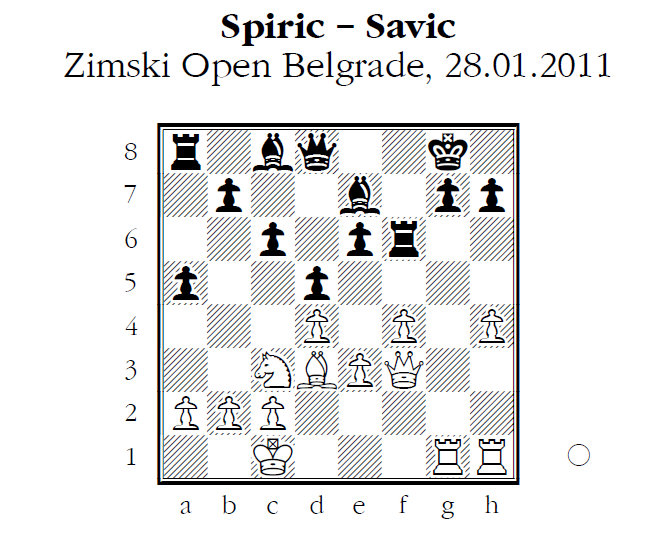


There are two sacrifices I would consider here- Rg7 and Bh7. Let’s look at the rook sac first:
1. Rg7 Kg7
Now, the idea I had was to play Qh5 and attack the h-pawn and/or bring the rook to g1. However, I really couldn’t quite make this work:
2. Qh5 h6
Here, Rf5 or Qh8 both look ok, but I can’t really find any fault at all with h6:
3. Rg1 Kh8 and now what for white? Every entry point for white’s pieces are adequately guarded (h6, g6, g7, g8). I see no real compensation for the rook- just a pawn some very, very modest pressure on the black king. The other plan to play Rg1 at move 2 really doesn’t add much if anything:
2. Rg1 Kh8
3. Bh7
Here, Qh5 will just transpose into the line above. Bh7 threatens Rg8 (not that the threat is worth all that much down a rook already).
3. …..Rh6
Here, Qe8 is probably fine as a cover of h5, too. What black cannot do is take at h7 since that is mate starting with Qh5 followed by Qf7 and Qg7.
4. Rg8
I looked at plausibly winning/drawing lines starting with 4.Bd3 and 4.Bg6, but after black plays Bh4- black’s defenders are just too numerous to make anything to compensate for the lost rook. Getting the black queen for the other rook and bishop seems all that is left:
4. …..Qg8
5. Bg8 Kg8
And I don’t see anything in this line for white to compensate for the material deficit (two rooks and a bishop is worth quite a bit more than a queen). He might continue with h5 to hold the h-pawn, but black will consolidate with Bd7, Kf7 and bring the other rook to bear on the king side and should have more than enough for a win. However, this working through this line did demonstrate to me the efficacy of playing Bh7 immediately at move 1:
1. Bh7!
Black has Kh7, Kh8, Kf7, and Kf8, but they all look bad:
1. …..Kh7
2. Qh5 Rh6
Here, Kg8 is going to be mate since the rook sac at g7 is now deadly: [Kg8 3.Rg7 Kg7 4.Rg1 Kf8 (Rg6 5.Qg6+-) 5.Qh8 Kf7 6.Rg7#]. However, Rg7 is still powerful:
3. Rg7 Kg7
4. Rg1 Bg5
Here, Kf8 loses to Qh6 followed by Rg8, Kf6 is mate starting with Qh6+, Kh7 is mate starting with Qf7, and Rg6 we saw above is mate starting with Qg6. Continuing:
5. Rg5 Qg5 (what else?)
6. Qg5 Rg6
7. Qe7 Kh6
8. Na4
Best I can find for white. At the moment, white has immobilized the black queen’s rook and bishop with his queen at e7. Black is almost in a kind of zugzwang with few really even neutral kinds of moves. Na4 threatens Nb6 followed by Qf8+ winning a piece, or Qc7 if black plays the rook to b8 in reply to Nb6. I don’t see any way for black to hold on the bishop or avoid having the trade a rook for a knight.
Back at move 1 after white’s 1.Bh7, black can do no better by declining the offered bishop:
1. …..Kh8
2. Bg6 Rg6
Here, black must either give up the exchange or make a hole at e7 and d6 for the king: [Bb4 3.Qh5 Kg8 4.Qh7 Kf8 5.Qh8 Ke7 6.Qg7 Kd6 7.e4! and white will easily win this]; or [Kg8 3.Qh5 Bb4 and we transpose to the line immediately above].
3. Rg6 and white is up an exchange, a pawn, and has a powerful attack on the black king.
Or, at move 1:
1. …..Kf8
2. Rg7
White wins with simple moves like Qg4, but this sacrifice offer is more elegant and forcing, I think:
2. …..Kg7
Here, Ke8 is probably a bit better, but clearly lost, so why not, in a real game, make white prove it?
3. Rg1 Rg6
We already saw variations of the position that arises after black takes at h7 and white plays Qh5+ in the first move alternative Kh7, so we don’t need to consider that line at all now.
4. Rg6 Kf7 (else is mate)
5. Qh5 and black will lose at a minimum, his queen and a pawn for a rook.
Or, finally:
1. …..Kf7
2. Qh5 Kf8
3. Rg7 and black again loses his queen for a rook at a minimum.
1.Bxh7+ Kxh7 2.Qh5+ Rh6 3.Rxg7+ Kxg7 4.Rg1+ Bg5 5.Rxg5+ Qxg5 6.Qxg5+ Rg6 7.Qe7+ +-.
1.Bxh7+! should do it. After
1…Kxh7
2.Qh5+ Black has some different ways to contiune
2…Kg8
3.Rxg7+! Kxg7
4.Rg1+ Kf8
5.Qh8+ Kf7
6.Rg7#
Or 2…Rh6
3.Rxg7+ Kxg7
4.Rg1+ Kh7
5.Qf7+ Kh8
6.Qg7#
If Spriric did this over the board, give credit where it’s due.
The main line is:
1. Bxh7+ KxB
2. Qh5+ Kg8
3. Rxg7+ KxR
4. Rg1+ Kf8
5. Qh8+ Kf7
6. Rg7#
If Black declines the Bishop and Rook sacrifices, it’s more complicated.
Mark
Bxf7 Kxh7
Qh5+ Rh6
Rxg7 Kxg7
Rg1+ Kf8
Qxh6+ Ke8
Rg8+ Kd7
Rxd8
i can’t find a mating sequence… i found this sequenece fairly quickly but have spent a long time looking for a mate but can’t find it.
there has to be some kind of maitng sequence
Wolverine, your line will clearly be winning without finding an immediate mating sequence.
You have enough material plus (including a good h pawn and a remote knight) to win this easily.
Black’s remaining pieces (2R+B) should produce little difficulties for you I think.