
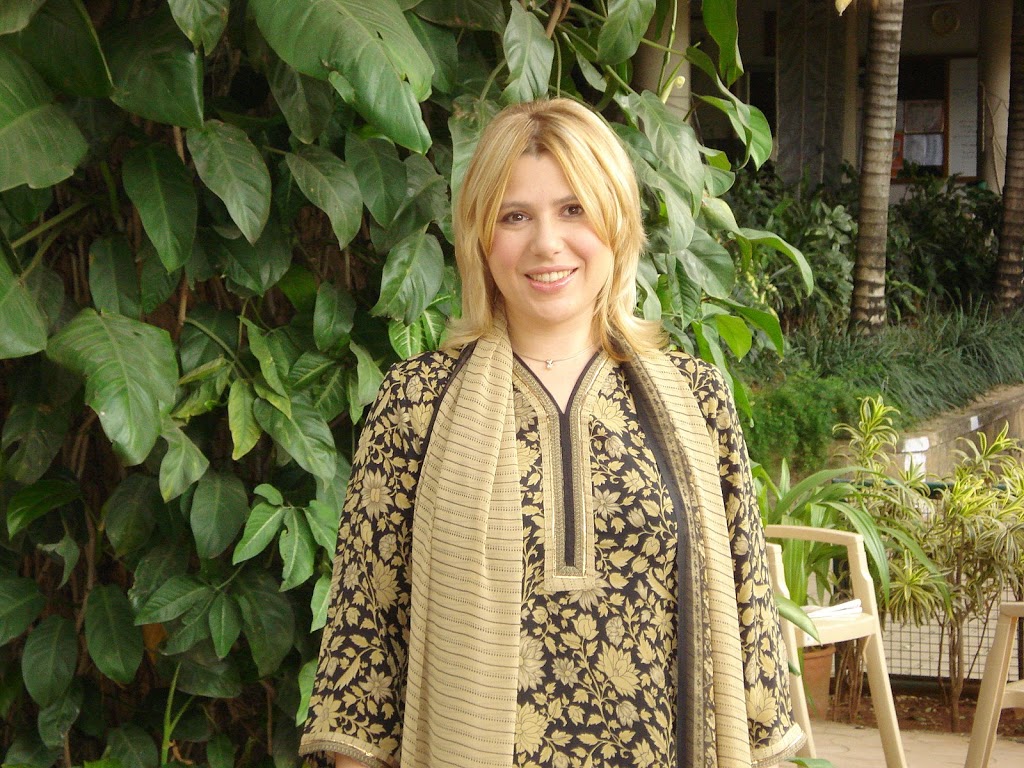
INTERVIEW / Susan Polgar
Path-breaker hungry for more success
Josey Samuel
http://www.deccanherald.com/
Even as the Hungarian army were struggling to find tactics to tackle the strong Soviet invasion in 1988, a 19-year-old girl was deploying pawns, rooks and knights to tear apart the USSR dominance in women’s chess.
Three years later, ironically the year in which the last of the Soviet troops left Budapest, Susan Polgar rewrote history as she broke down the gender barrier to annex the men’s Grandmaster title.
In her illustrious career, spanning over 34 years, Susan, who is an American citizen now, won five gold medals at the chess Olympiad with an undefeated record of 56 matches apart from four World Championship titles. Her triumph at the 1996 world championship gave her a unique triple crown — Rapid, Blitz and Classical World Championships — making her the only world champion in history (male or female) to attain such a feat.
Ranked number one in the world at the tender age of 15 and remaining in the top three for more than 20 years, Zsuzsanna Polgar — as she is known in Hungary — spoke to Deccan Herald mainly about her chess career, memorable moments and the Polgar Chess Centre on the sidelines of the National Geographic ‘My Brilliant Brain’ showcase in Bangalore recently.
What motivated you to take up chess?
Actually it was by accident I became a chess player. I was about three-and-a-half years old when I started liking the chess board as a toy. Just like a magnet attracts iron, the chess board and pieces attracted me. My father saw my interest and taught the game with the help of a book. Step by step the progress came.
Could you tell us about your rise to the world’s top player at the age of 15?
My life changed forever when I won the Budapest Championship for girls under-11 with a perfect 10-0 score. To do this at the tender age of four against other girls who were almost three times my age was something special for me. My talent got recognised by the chess players in Hungary. But my breakthrough on the world stage came when I became the youngest woman Grandmaster in the history of the game at the age of 12. Three years later, I became the women’s World No 1.
You quit active chess in 1996 but came back after eight years in 2004 to win the first Olympiad gold for the USA. How difficult was the comeback?
Yes, I was in exile for eight years. But that was because I wanted a family life like others. It took too long because I wanted to be with my children for some time. Being out for such a long time and coming back was a lot difficult. Many thought that was the end. But I made my presence felt with the first gold medal in chess Olympiad for the US.
Your take on Viswanathan Anand and Koneru Humpy?
Anand is a brilliant player, really good. I loved his game. He is a good friend of mine. We talk a lot about chess when we are together. Humpy is one of the best in women’s chess. These are good signs for chess in India.
Here is the full article.

Nice interview. I guess Bangalore is big into chess.
‘Grandmaster’ was never “the men’s Grandmaster title” – and by the time Susan Polgar became a grandmaster, there were female Grandmasters before her.
Yes, we know they didn’t become Grandmasters by the ELO route, but that doesn’t matter.
Is this another ‘error by a journalist’ or more propaganda?
FIDE makes a distinction on its site who has the ‘wg’ and ‘g’ titles so obviously it matters to them about the type of title obtained by a player. As for journalistic error, it was simply a short-hand way of saying that Susan was the first woman to obtain a ‘g’ title.
The Soviet army did not invade Hungary in 1988.
Mark
On October 23, 1956, a Budapest student rally in support of Polish efforts to win autonomy from the Soviet Union sparked mass demonstrations. The police attacked, and the demonstrators fought back, tearing down symbols of Soviet domination and HWP rule, sacking the party newspaper’s offices and shouting in favor of free elections, national independence, and the return of Imre Nagy to power. Erno Gero (Soviet Party leader in Hungary) called out the army, but many soldiers handed their weapons to the demonstrators and joined the uprising . Soviet officials in Budapest summoned Nagy to speak to the crowd, but the violence continued. At Gero’s request, Soviet troops entered Budapest on October 24. The presence of these troops further enraged the Hungarians, who battled the troops and state security police. Crowds emptied the prisons, freed Cardinal Mindszenty, sacked police stations, and summarily hanged some member of the secret police. The Central Committee named Nagy prime minister on October 25 and selected a new Politburo and Secretariat; one day later, Janos Kadar replaced Gero as party first secretary.
The Soviet military responded to Hungarian events with a quick strike. On November 3, Soviet troops surrounded Budapest and closed the country’s borders. Overnight they entered the capital and occupied the National Assembly building. Kadar, who had fled to the Soviet Union on November 2, assembled the Temporary Revolutionary Government of Hungary on Soviet soil just across the Hungarian border. On November 4, the formation of the new government was announced in a radiobroadcast. Kadar returned to Budapest in a Soviet armored car; by then, Nagy had fled to the Yugoslav embassy, Cardinal Mindszenty had taken refuge in the United States embassy, Rakosi was safely across the Soviet border, and about 200,000 Hungarians had escaped to the West.
With Soviet support, Kadar struck almost immediately against participants in the revolution. Over the next five years, about 2,000 individuals were executed and about 25,000 imprisoned. Kadar also reneged on a guarantee of safe conduct granted to Nagy, who was arrested on November 23 and deported to Romania. In June 1958, the Hungarian government announced that Nagy and other government officials who had played key roles in the revolution had been secretly tried and executed.