Menu   ≡ ╳
  • News
    • Major Tournaments
    • General News
    • USA Chess
  • Puzzles
  • Improvement
  • Event
  • College
  • Scholastic
  • Women
  • Search

        More results...

        Or you can try to:
        Search in Shop
        Exact matches only
        Search in title
        Search in content
        Search in comments
        Search in excerpt
        Search for News
        Search in pages
        Search in groups
        Search in users
        Search in forums
        Filter by Categories

        Try these: Sicilian Defense, Empire Chess, USA Chess

    • SPICE
    • Videos
    • Susan’s Blog
    • About Us
    • Contact Us
    • SPICE
    • Videos
    • Susan’s Blog
    • About Us
    • Contact Us
    Menu   ≡ ╳
    • News
      • Major Tournaments
      • General News
      • USA Chess
    • Puzzles
    • Improvement
    • Event
    • College
    • Scholastic
    • Women
    • Search

          More results...

          Or you can try to:
          Search in Shop
          Exact matches only
          Search in title
          Search in content
          Search in comments
          Search in excerpt
          Search for News
          Search in pages
          Search in groups
          Search in users
          Search in forums
          Filter by Categories

          Try these: Sicilian Defense, Empire Chess, USA Chess

      Home  >  Daily News • General News • SPICE / Webster • Susan's Personal Blog  >  Does practice make perfect?

      Does practice make perfect?

      Chess Column, Shelby Lyman


      Shelby Lyman on Chess: Practice, Practice, Practice?
      Sunday, September 21, 2014
      (Published in print: Sunday, September 21, 2014)

      “Practice makes perfect” is an accepted truth, or at least a truism. But how much practice is really enough?

      In his book Outliers, Malcolm Gladwell popularized the notion — offered in a 1993 paper by K. Anders Ericsson — that 10,000 hours of immersion and practice are necessary to achieve “professional mastery.”

      There is a direct correlation, Ericsson claims, between the number of hours and the degree of expertise. The rule applies to such diverse activities as playing the violin and chess.

      It is not surprising that this theory — despite its insight into the central role of practice — evokes incredulity in more than a few of us. On the face of it, given our chess experience alone, the idea seems counterintuitive.

      Sammy Reshevsky and Jose Capablanca, for example, were child prodigies who, it seems, were fully equipped by the gods at birth to play chess. Intensity, passion, scientific curiosity, stubbornness and competitiveness are also among the characteristics of a world-class grandmaster. The result is an unpredictable and unique synthesis.

      Some, of course, are much better than others.

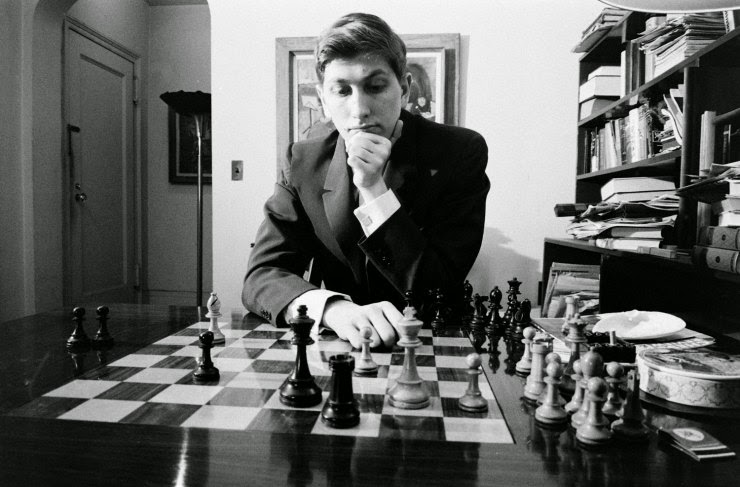
      The Russian grandmaster Mark Taimanov offered this impression of Bobby Fischer: “His moves do not make sense, at least to all the rest of us. We were playing chess. Fischer was playing something else … call it what you will. Naturally there would come a time when we would all understand what those moves had been about. But by then it was too late. We were dead.”

      With geniuses such as Bobby, the 10,000-hour rule seems irrelevant.

      More here.

      Chess Daily News from Susan Polgar
      Previous Article Wasted opportunity due to incompetence and ugly chess politics
      Next Article GM Zhang Zhong clear first in Malaysia Open

      About Author

      Susan Polgar

      Related Posts

      • Chess Tips: Improvement for beginners and novice players

        September 18, 2017
      • The Chess Tech Evolution

        May 9, 2016
      • Lyman: “Karjakin is no patsy…”

        April 10, 2016

      2 Comments

      1. Anonymous Reply
        September 21, 2014 at 8:55 pm

        Nakamura is way higher rated.

      2. Anonymous Reply
        September 21, 2014 at 10:39 pm

        Yeah sure… Nakamura’s brand DOES NOT MAKE ANY SENSE AT ALL… He kept on losing games & elo points despite having early positional advantage. And when he does lose, he always blame it in a lot of things except himself. Thats why Nakamura is weird & unique as his chess style does not make any sense at all. His playing more kamikaze brand of chess game no wonder his ranking shrinking everyday. For all you know before the year ends his out of the 2700 club.

      Leave a Reply to Anonymous Cancel reply

      Improvement

      • Important Scholastic Coaching Tips
      • My Chess Quotes Over The Years
      • My kids know chess rules. What’s next?
      • Chess Parenting

      Events

      • My Top 10 Most Memorable Moments in Chess (Part 3) May 13, 2021
      • My Top 10 Most Memorable Moments in Chess (Part 2) May 12, 2021
      • My Top 10 Most Memorable Moments in Chess (Part 1) May 10, 2021
      • About Susan Polgar April 9, 2021
      • About Us
      • Contact Us
      • Daily News
      • My Account
      • Terms & Conditions
      • Privacy Policy

      Anand Armenia Breaking News Chess Club and Scholastic Center of St Louis Chess interview Chess Olympiad Chess tactic Chess tournament chess trivia China FIDE Grand Prix Holland India Khanty-Mansiysk LIVE games Lubbock Magnus Carlsen Moscow National Championship Norway OnlineChessLessons Philippines Puzzle Solving Russia Scholastic chess Spain SPF SPICE SPICE Cup St Louis Susan Polgar Tata Steel Chess Texas Tech Tromsø TTU Turkey Webster University Wesley So Wijk aan Zee Women's Chess Women's Grand Prix Women's World Championship World Championship World Cup

      April 2026
      M T W T F S S
       12345
      6789101112
      13141516171819
      20212223242526
      27282930  
      « Sep