

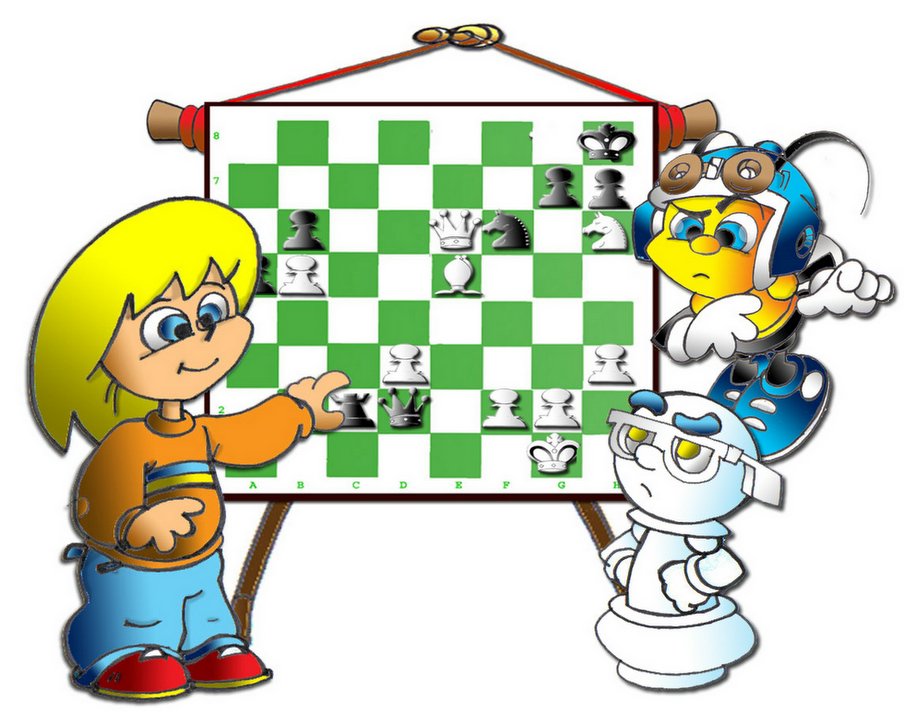
Artwork by Mike Magnan
Chess returns to the timetable: Schools reintroduce game in attempt to improve children’s brainpower
Source: www.dailymail.co.uk
By Laura Clark
Three decades after it was virtually wiped out in state schools, the game is making a dramatic comeback.
In just two years, 175 primary schools across England and Wales have introduced formal teaching in chess.
It follows research suggesting the ‘game of kings’ brings a range of educational benefits including improved concentration and memory.
The charity spearheading the revival, Chess in Schools and Communities CSC, said its aim was to expose as many children as possible to the benefits of the game.
It added that the initiative was also beginning to produce a new generation of potential chess champions.
The game’s losing streak began in the 1980s when industrial action by teachers damaged the provision of many extra-curricular activities in state schools.
But chess continued to boom in independent schools. Pupils who attend fee-paying schools are now heavily over-represented among young entrants to chess tournaments.
Under the programme, the charity sends in chess tutors to teach the game to an entire year group for 30 weeks. Pupils usually receive around an hour’s coaching a week.
The school then sets up a chess club to cater for youngsters who wish to continue playing.
So far, 175 primaries have signed up, including some in the inner-cities, with a target to reach 1,000 over the next three years.
Newham, a borough in inner-city London, wants to introduce the scheme to all its primaries.
Malcolm Pein, an international chess master and chief executive of CSC, said chess was an antidote to the relentless rise of video games.
It was better to concentrate on a game of chess than play a ‘there it is, shoot it’ game.
‘Chess fell out of favour in the 1980s, as did lots of extra-curricular activities, when there was a big falling out between the Government and teachers, and didn’t recover,’ he said.
‘Chess is now growing in schools because there is increasing awareness among head teachers it’s a very good thing.’
The scheme was also beginning ‘organically’ to produce youngsters with champion potential, he added.
‘These children would not otherwise have had the opportunity.’
About 1,800 primary schools in England and Wales – about one in 10 – currently offer some form of chess provision, mainly in the form of after-school sessions.
Only around half of these actually offer teaching in the game, and barely any outside the CSC scheme organise lessons as part of the curriculum.
‘What we do is teach it in a class during the school day. Traditionally it has been an out-of-school activity.’
Chess provision is thought to be even more sparse at secondary level.
The charity is focusing on primary schools since research suggests the benefits of chess are more widespread if children are exposed to the game at a younger age.
As well as improving their maths, reading, reasoning and problem-solving skills, youngsters also learn sportsmanship.
At St Paul’s Church in Wales Primary School, in Grangetown, Cardiff, chess was introduced under the CSC scheme in September last year.
The school has since been crowned Welsh Primary School Team Champion and several children have done well in individual championships, while a number are training with the national squad.
Full-time chess coach Tim Kett, who tutored youngsters with his wife Sarah, said: ‘Sarah and I have watched with delight as the whole school has taken to the game in a way no-one here could have believed possible.
‘They have absorbed chess into the school’s “bloodstream” and a huge number of pupils play it at every opportunity and continue to reap ever-bigger rewards in all sorts of ways.’
Susan Jones, the headmistress, said: ‘Some children who had presented very challenging behaviour on a number of occasions enjoyed playing chess very much.
‘Not only did it show them how to improve their concentration and thinking skills, but this success and renewed confidence and self-esteem has also been transferred to all aspects of school life.’
Published by: http://www.fide.com
Fantastic idea.