

Chess in the Caucasus
By Vestnik Kavkaza
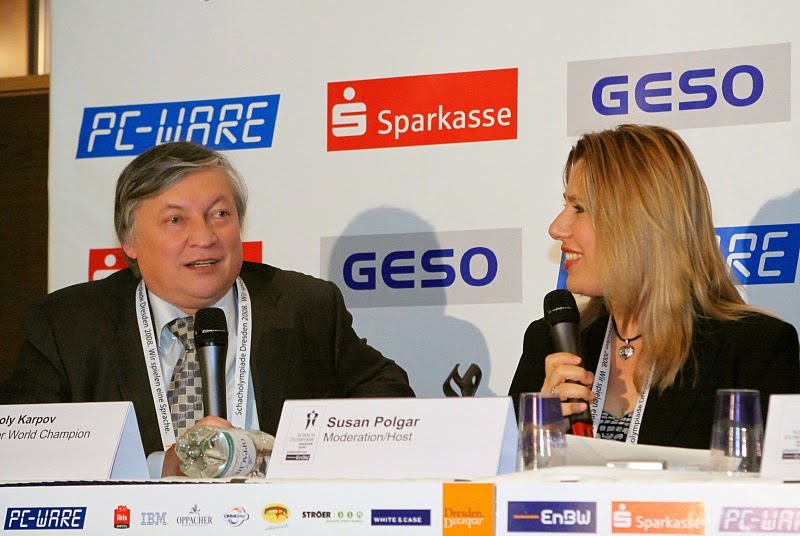
The Soviet chess school was well-known all over the world. When the Soviet Union collapsed, world champions such as Botvinnik, Smyslov, Tal, Karpov, and Spassky founded the International Association of Chess Federations of the CIS countries. It is one of the oldest organizations in the CIS space. Anatoly Karpov, grand master, the first deputy of the State Duma Committee on Economic Policy, Innovation Development and Entrepreneurship, speaks about the level of chess schools in various countries of the post-Soviet space.
“When the world became global, working groups were mingled and personal coach groups became international. Today we cannot say that we have chess school secrets. The whole world knows them. At the same time, the training system in the USSR chess organization was perfect, and Armenia and China managed to improve it. Today Armenia and China have the best chess federations and organizations. There were changes in Russia; we should only encourage the spirit of our players,” Karpov thinks.
According to him, women’s chess is developing: “Previously there were problems with it. In Soviet times we were oriented toward the example of the GDR, where certain cities were responsible for certain kinds of sport. For example, Leipzig was responsible for cycling, Dresden – for swimming. And in the USSR it was decided that Georgian girls play chess outstandingly, they were world champions. So, let them deal with chess. At the same time, in Russia women’s chess always stayed at a high level, and before Gaprindashvili all the champions were Russian. But the general position was to give it to Georgia. Russia fulfilled the order, as a disciplined republic, while Ukraine, Azerbaijan and Kyrgyzstan continued developing women’s chess secretly. When the USSR collapsed it appeared that women’s chess in Russia was underdeveloped, while in Ukraine they immediately began to fight for championship titles. Female chess players from Kyrgyzstan got in the top three of the Asian Championships. Azerbaijan had good players, for example Sofia Aliyeva. Armenian girls played well. And only Russia lost everything.”
Karpov hopes that the Aeroflot Tournament will be restored: “I remember how the Foreign Ministry met us halfway when problems with Georgia occurred. Georgian grandmasters always participated in our Aeroflot Tournaments. I remember how difficult it was to be issued a visa at the time, but we managed to bring Georgian grandmasters, I mean Dzhobava. He took part in the Moscow International Aeroflot Tournament in 2008, the most difficult period.”
Karpov told Vestnik Kavkaza that “chess could be an instrument of bringing people closer. If people don’t meet, they cannot understand each other or find ways out of problems. Of course, in such difficult situations as the conflict between Azerbaijan and Armenia over Nagorno-Karabakh, compromises are needed, but a solution should be found. People live close to each other, they are neighbors, and they should find a solution. I remember when there was the war, we managed to bring to the negotiating table representatives of the Azerbaijani and Armenian intelligentsia not within the chess movement, but within the movement of peace supporters, there was the Soviet Peace Foundation. As a result it led to further meetings between politicians, and the war was stopped. It is a huge achievement, and now we cannot achieve it in Eastern Ukraine. Even leaders of the European countries say that first of all the military activity should be stopped in the east of Ukraine, talks should be initiated, and people should try to listen to each other and find a mutually satisfactory solution. I think the knot of fears and problems in the Caucasus and Ukraine can be undone only through negotiations.”
As for the level of chess players in the Caucasus Karpov said: “I have already said that chess playing is developed in all countries of the Caucasus, including Armenia and Azerbaijan. As for Georgia, some of their women retired, others left the country. And now women’s chess in Georgia is at a lower level than before. But men’s chess is developed better than in Soviet times.
As for the North Caucasus, Nalchik is very active in chess development, first of all women’s chess. Unfortunately, interest is not high, as the traditional chess development base was Kislovodsk, where tournaments took place. We should restore the traditions. The Caucasus is not far from chess, and chess has always been in the Caucasus.
Source: http://vestnikkavkaza.net
He’s right.