

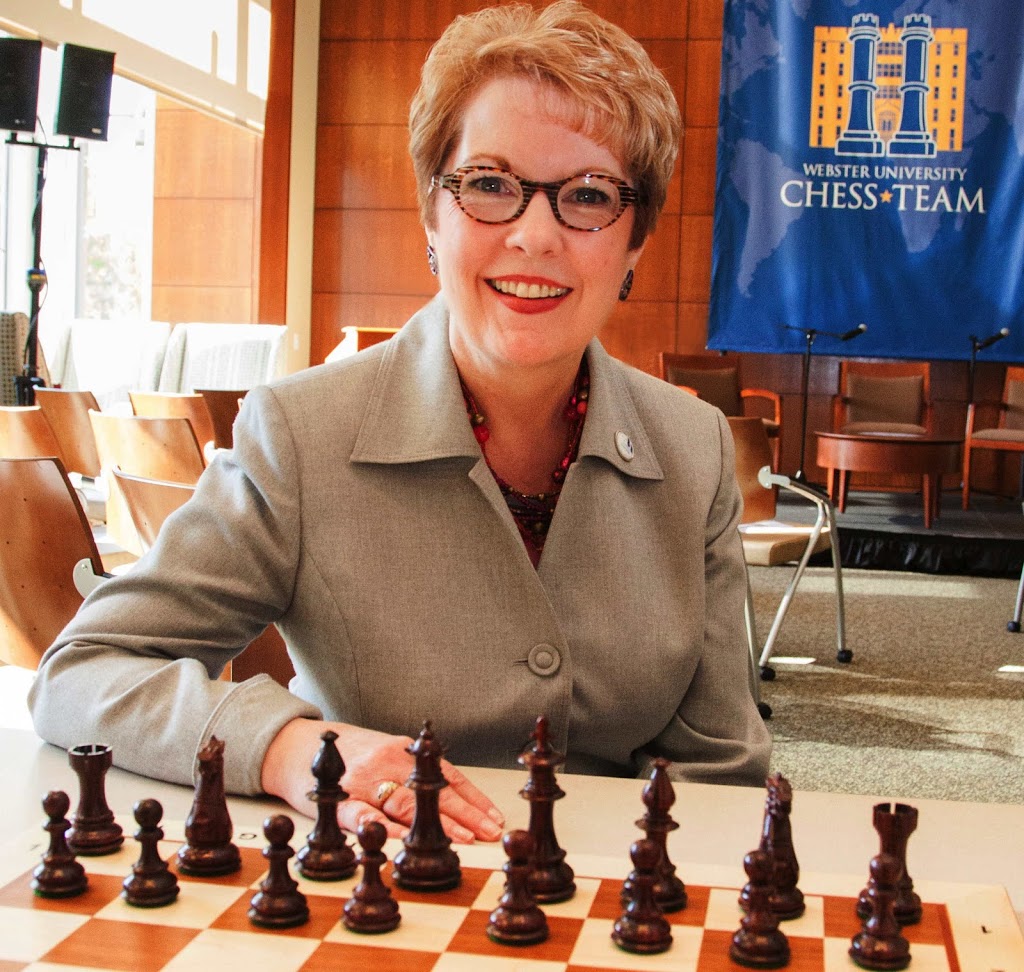
Dr. Beth Stroble, President of Webster University
President Stroble and Webster as Social Media Leader in Higher Ed
Posted: 31 Oct 2012 09:09 AM PDT
Dr. Elizabeth (Beth) J. Stroble was named President of Webster University in 2009. Stroble leads a unique institution, consisting of a home campus in Webster Groves, MO, and 100 more locations in the U.S. and around the world. More than 22,000 students, ranging from traditional-age students to adults are enrolled in Webster’s programs.
Before coming to Webster, Stroble served as senior vice president and provost and COO at the University of Akron. She tweets as @WebsterPres.
What prompted you to begin using social media for communicating with your constituents?
I became the president at Webster in the summer of 2009 and I immediately started thinking about how I could communicate with people at this unique institution. I wanted to find a way to communicate who I am as president: it’s a new role for me.
I wondered what would work for me, how I could tell stories about Webster. Then in fall of 2009, we hosted Jack Dorsey [@Jack, the founder of Twitter and Square]. I sat in the audience listening to him and a lightbulb went off for me. I realized that Twitter was what I was looking for.
I was an early email user — in fact, I wrote my dissertation on instructional uses of email — and I saw Twitter as better than email for the purpose of community-building, which is what I wanted. Within a day, I secured @WebsterPres on Twitter. I don’t feel as if I know a lot about what you can do with Twitter. But it works well for what I need it to do. It’s a great tool that cuts across boundaries — time, geography, which are important here at Webster. And Twitter is a great equalizer — anyone can feel OK about communicating with anyone else on Twitter.
I also use Facebook. I used to use Twitter more, but for a while now I’ve been posting on Facebook more frequently. I can do better with photos on Facebook — and I can also use Insights tracking to see what photos get more interest. And of course some stories and some thoughts just can’t be constrained to 140 characters.
The audience on Facebook is more of an internal audience — students, faculty, and staff. The Twitter audience is more distributed — it includes folks in highered, reporters and media, and others outside the university and they don’t tend to follow me on Facebook. So, for example, if I want to talk about how Webster people are welcoming back students, I’ll share that on Facebook because my followers there will be more interested.
How do you manage it?
I had a staff member here who had sometimes tweeted for me. She’s no longer with us, so I’ve been doing more of the tweeting, and I feel comfortable doing this myself. She and I were on the same wave-length and a partnership worked as I was beginning to use social media.
Have you found that your presence on Twitter has enabled you to make unexpected connections, especially those that you wouldn’t have made otherwise?
I think that has happened with Twitter, though it’s often hard to trace the path of those connections. I’d say that for Webster as a whole, our social media presence has put us on the map in higher ed and that would have been hard to achieve in any other way. For example, I’ve been invited to blog for the Huffington Post as a result of our social media presence.
Here’s another example of where Twitter has helped, our chess team is very successful and uses social media extensively. Once I started retweeting some of their stories, I started to be followed by members of the chess community. So what you retweet bounces you out into communities where you haven’t been before. Many of those people are international, and that helps Webster: we want more of a presence internationally.
Why is that important?
As president, I need to be out in the external environment interacting with many different constituents — government leaders, economic development officials, presidents and others in higher ed. It’s important for me to transmit what I hear from them to the Webster community so that we can identify opportunities to transform our university. At the same time, I’m gathering our stories about what’s happening at Webster and sharing them with the broader world, so people there can see how we’re taking action and can help us to further our mission. This is a fundamental part of my job.
Twitter is great because it’s easy to use when I’m out and about. It’s fun and I get a kick out of it.
Are there institutions where it would be difficult for the president to use social media?
Well, there could be. It’s easy here: the eclectic, engaging, social way Webster lives makes this fertile ground for social media.
I do feel comfortable sharing some personal information occasionally: part of my brand is a personal and professional blend. I won’t post very personal things on Twitter: I’m aware that I’m always posting as Beth Stroble, the president. So I’ll share photos of my family occasionally, but I won’t go into great detail into my personal opinions about things. If I wanted to do that, I’d use a different Twitter feed, not @WebsterPres.
So I think that calculation would be different for a different kind of institution. At some kinds of institutions, being out there on social channels could start a difficult conversation online.
And that’s part of the anonymity that comes with lack of face-to-face contact with any technology-enabled communication tool — even the phone. Unless you’re face to face, you can’t be sure who you’re talking with, so you can’t be naive about using technology. It’s really important for presidents not to overlook the mistakes that could be made in thinking that the informality of social media means you don’t have to think about what you say and choose your words carefully.
Source: http://eduniverse.org
Twitter is a game changer.
Thanks for such a nice post for social media management services.
social media management services