

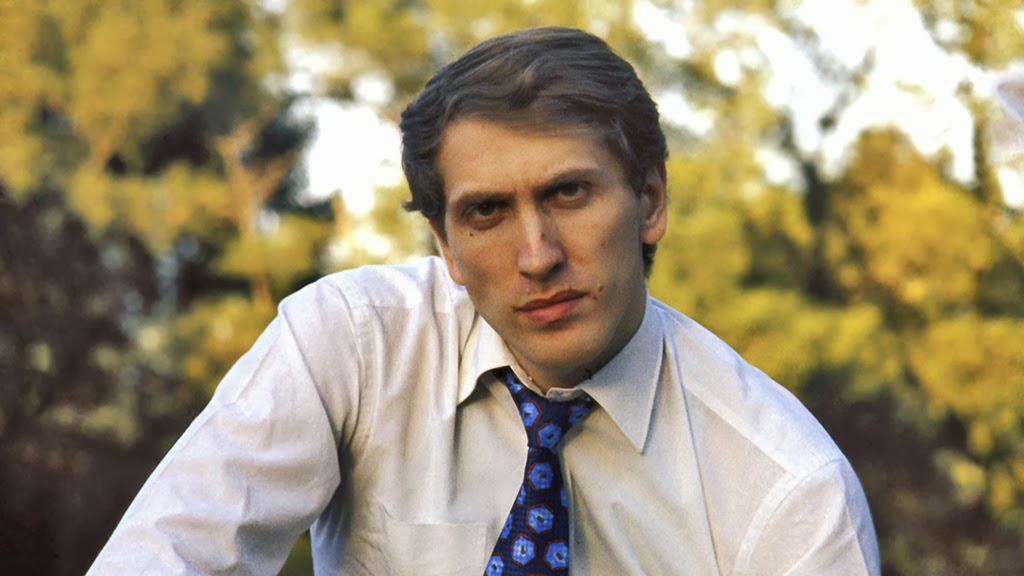
Here are 43 facts you might not know about the cold warrior of chess and the “Match of the Century” that made him famous.
1. Robert James “Bobby” Fischer was born in Chicago on March 9, 1943. He grew up in Brooklyn.
2. Boris Spassky was six years older and hailed from Leningrad.
3. In the USSR, chess was state-subsidized, with the best players being awarded generous grants and becoming national heroes.
4. The Soviets dominated international chess, winning 24 consecutive world championship titles.
5. Largely indifferent to chess, the U.S. had only ever had one world champion, Wilhelm Steinitz, a naturalized citizen who won in 1888.
6. By the age of 13, Fischer was U.S. champion. He soon dropped out of high school.
7. Spassky had become an international master at the age of 16.
8. Boris Spassky entered the match as reigning world champion, having defeated fellow Soviet Tigran Petrosian in 1969.
9. Fischer had never previously beaten Spassky.
10. He nevertheless entered as a pre-competition favorite, having demolished top grandmasters in his last 20 games while earning the undisputed right to challenge Spassky.
11. Reykjavík, Iceland – a neutral ground under neither Soviet or American influence – was selected as the site of the match.
12. The match would be comprised of 24 games played in July and August of 1972.
13. The winner was to be awarded $78,125.
14. The loser would receive $46,875.
15. Fischer prepared for the match by withdrawing into an upstate New York hotel and studying chess literature and previous Spassky games.
16. Fischer liked listening to loud rock music as he prepared.
17. The match nearly didn’t happen as Fischer issued a series of last minute demands from New York.
18. These included 30 percent of the TV and film rights, and 30 percent of the gate receipts.
19. The match was delayed while officials negotiated. Spassky stayed in Iceland, waiting.
20. Henry Kissinger urged Fischer to play, seeing his potential victory as a symbolically valuable Cold War coup.
21. When the match finally got underway, 10 days later than scheduled, it became the most heavily covered contest in the history of the sport. Fischer got off to a bad start, losing the first game after refusing to play for a draw.
22. He didn’t show up for the second game, complaining that the sound from film and TV cameras was distracting him. He lost by forfeit, and considered abandoning the match altogether.
23. A member of his camp, Catholic priest Bill Lombardy, ripped wiring from Fischer’s car so he would be unable to drive himself to the airport.
24. The Soviet federation pressured Spassky to use Fischer’s behavior as an excuse to withdraw, but Spassky wanted to continue playing.
25. In another show of sportsmanship, Spassky further acceded to Fischer’s demands, this time that the third game be played in a side room, away from the film camera (but monitored by video). Fischer won this game, considered the turning point of the match.
26. Games 4 and 5 ended in a draw. Fischer won game 6, considered the best in the match. Spassky publicly applauded him at the match’s conclusion.
27. By game 17, the score stood at Fischer 10, Spassky 7.
28. The Soviets then alleged that the Americans had installed a special electronic device in the Eames executive chair Fischer used. This device, when triggered by Fischer’s shifting in his seat, would jam Spassky’s brainwaves. Officials conducted a thorough search of the playing area and X-rayed the chair. No device was found.
29. Spassky conceded defeat over the telephone during an adjournment in game 21. Bobby Fischer was the new world champion.
30. Dutch grandmaster Jan Timman called Fischer’s win “the story of a lonely hero who overcomes an entire empire.”
31. Spassky was personally blamed by the Soviets for the defeat. They began putting their resources behind a new challenger, Anatoly Karpov.
32. Unofficially exiled from Soviet chess, Spassky was allowed to immigrate to Paris in 1976. He became a French citizen and continued to play competitively, though he would never again reach chess’ top echelons.
33. Fischer appeared on the cover of Sports Illustrated and appeared in a Bob Hope television special with Olympian Mark Spitz.
34. Membership in the U.S. Chess Federation doubled between 1972-1974, a period known as “The Fischer Boom.”
35. Fischer would refuse to defend his title, and was stripped of it in 1975. Karpov was named the new champion.
36. Fischer didn’t play another game of competitive chess for 20 years.
37. He went into virtual hiding, living in Pasadena and San Francisco.
38. In 1992, Fischer agreed to restage the match in an unsanctioned event controversially held in Yugoslavia, which was then under international embargo. The U.S. government warned Fischer that playing would violate an executive order signed into law by President George H.W. Bush.
39. Fischer played anyway, netting a $3.5 million prize for defeating Spassky again. An arrest warrant was issued and Fischer never returned to the U.S.
40. He lived next in Budapest, then the Philippines. He was detained in Japan in 2004 for attempting to use a revoked U.S. passport. He escaped deportation to the U.S. when he was granted asylum in Iceland, setting of his greatest victory.
41. Bobby Fischer died there of renal failure on January 17, 2008, at the age of 64.
42. His story provided the backdrop for the 1993 film Searching For Bobby Fischer and he was subject of Bobby Fischer Against the World, a documentary that played at this year’s Sundance Film Festival.
43. Director David Fincher (Fight Club, The Social Network) is attached to direct Pawn Sacrifice, a biopic focusing on Fischer’s early life and culminating with his historic win over Spassky.
Source: http://www.legacy.com
43? Facts about Fischer? Don’t think so.
Fischer is great!
some are facts about Spassky and Soviet Union
this day, March 9th rather
All things considered,the greatest chess player ever. The Rod Laver of chess.
Amar