Menu   ≡ ╳
  • News
    • Major Tournaments
    • General News
    • USA Chess
  • Puzzles
  • Improvement
  • Event
  • College
  • Scholastic
  • Women
  • Search

        More results...

        Or you can try to:
        Search in Shop
        Exact matches only
        Search in title
        Search in content
        Search in comments
        Search in excerpt
        Search for News
        Search in pages
        Search in groups
        Search in users
        Search in forums
        Filter by Categories

        Try these: Sicilian Defense, Empire Chess, USA Chess

    • SPICE
    • Videos
    • Susan’s Blog
    • About Us
    • Contact Us
    • SPICE
    • Videos
    • Susan’s Blog
    • About Us
    • Contact Us
    Menu   ≡ ╳
    • News
      • Major Tournaments
      • General News
      • USA Chess
    • Puzzles
    • Improvement
    • Event
    • College
    • Scholastic
    • Women
    • Search

          More results...

          Or you can try to:
          Search in Shop
          Exact matches only
          Search in title
          Search in content
          Search in comments
          Search in excerpt
          Search for News
          Search in pages
          Search in groups
          Search in users
          Search in forums
          Filter by Categories

          Try these: Sicilian Defense, Empire Chess, USA Chess

      Home  >  Scholastic Chess  >  Why Chess Should Be Required in U.S. Schools

      Why Chess Should Be Required in U.S. Schools

      Chess benefits, chess in the schools, Scholastic chess

       
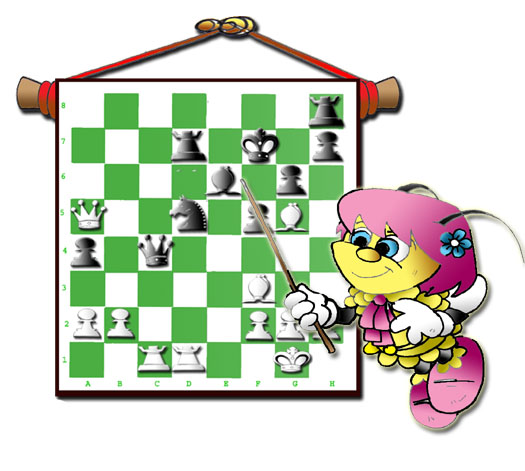
      Artwork by Mike Magnan
       
      Why Chess Should Be Required in U.S. Schools 
      It’s a game that motivates us to win, but also teaches us how to deal with defeat.
      April 15, 2013 • By Alex Berezow

      Rook to B8. Checkmate. There’s nothing quite like the feeling of defeating a worthy opponent in a game of chess: the ultimate battle of the wits. Of course, it’s not a feeling I have very often, since I’m not very good at chess. On the other hand, my father is officially an “expert” and my friend is a “master.” In other words, they are both very, very good. To give an idea of how good, if I was to play 100 games with each of them, I would win precisely zero. 

      Worldwide, chess is still a popular game, but it is treated with particular seriousness in Eastern Europe. For instance, the Bulgarian National Olympic Committee has been lobbying for chess to be recognized as an Olympic sport, as has Kirsan Ilyumzhinov, the Russian president of the World Chess Federation. In September 2011, Armenia made chess a required subject for all children over the age of six. (In the DW-TV news clip below, the children are in 2nd grade.) 

      Indeed, the Armenians may be on to something. One recent psychology study found that chess was associated with greater “cognitive abilities, coping and problem-solving capacity, and even socioaffective development of children.” Of course, because it was a cohort (observational) study, the link could be due to some third factor or the possibility that smart, mature children are more inclined to play chess in the first place.

      In the above video, the math/chess teacher says, “Chess trains logical thinking. It teaches how to make decisions, trains memory, strengthens will power, motivates children to win, and teaches them how to deal with defeat. It’s the only school subject that can do all of this.”

      That is a very interesting insight. Not only does chess help train the brain, but it also teaches children basic life skills. In our culture, we hand out trophies to winners and losers—or neglect to keep score at all—out of some misguided, politically-correct notion that we should never hurt anyone’s feelings. But, in Armenia, schools are teaching children reality: Sometimes you lose. That’s an important lesson, and it should be taught at a young age.

      What makes chess so fascinating is that no two games will ever play out the same. Checkers—really a game for intellectual wimps (like me)—has 500 billion billion possible positions, and, in 2007, researchers reported that a computer has solved the game. (If neither side makes a mistake, the outcome is always a draw.) But chess is far more complicated than checkers. It is unlikely that a computer will ever “solve” the game.

      Americans are concerned that our children aren’t receiving a solid K-12 education. Perhaps chess should be introduced into the curriculum as a fun way to teach logic and memory?
      In fact, I should get back to practicing the game. Knowing that there are seven-year-old Armenians that could run me off the chessboard without breaking a sweat is a tad humiliating.

      Source: http://www.psmag.com

      Chess Daily News from Susan Polgar
      Previous Article Webster U Final Four Champs analyzing with a Chess Legend
      Next Article Bacrot wins 10th Open International of Balagne

      About Author

      Susan Polgar

      Related Posts

      • Important Scholastic Coaching Tips

        May 1, 2021
      • My kids know chess rules. What’s next?

        April 16, 2021
      • Seminario con Susan Polgar en Costa Rica – XXVIII Pan-American Youth Chess Festival

        June 17, 2017

      1 Comment

      1. Anonymous Reply
        April 15, 2013 at 3:16 pm

        Right on.

      Leave a Reply

      Cancel reply

      Improvement

      • Important Scholastic Coaching Tips
      • My Chess Quotes Over The Years
      • My kids know chess rules. What’s next?
      • Chess Parenting

      Events

      • My Top 10 Most Memorable Moments in Chess (Part 3) May 13, 2021
      • My Top 10 Most Memorable Moments in Chess (Part 2) May 12, 2021
      • My Top 10 Most Memorable Moments in Chess (Part 1) May 10, 2021
      • About Susan Polgar April 9, 2021
      • About Us
      • Contact Us
      • Daily News
      • My Account
      • Terms & Conditions
      • Privacy Policy

      Anand Armenia Breaking News Chess Club and Scholastic Center of St Louis Chess interview Chess Olympiad Chess tactic Chess tournament chess trivia China FIDE Grand Prix Holland India Khanty-Mansiysk LIVE games Lubbock Magnus Carlsen Moscow National Championship Norway OnlineChessLessons Philippines Puzzle Solving Russia Scholastic chess Spain SPF SPICE SPICE Cup St Louis Susan Polgar Tata Steel Chess Texas Tech Tromsø TTU Turkey Webster University Wesley So Wijk aan Zee Women's Chess Women's Grand Prix Women's World Championship World Championship World Cup

      April 2026
      M T W T F S S
       12345
      6789101112
      13141516171819
      20212223242526
      27282930  
      « Sep